The Relevance of Dr. Rijal in Policy Debate and Socio-Political Analysis

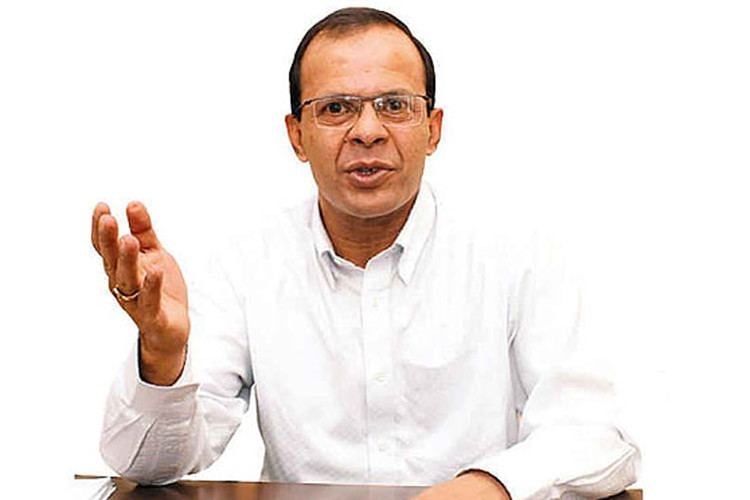
“To strengthen democracy, individuals being powerful is not enough; our system and constitution must be strong.” This statement, expressed by Nepali Congress leader Dr. Minendra Rijal to media persons outside the Parliament House on 2081 Shrawan 25, was not merely a fleeting political reaction; it was a mature expression of his long-standing political vision. Referring to the government formed through the cooperation of two major parties, he clarified that if cooperation remains limited to the arithmetic of power, it will not meet public expectations; democracy is strengthened only when such cooperation is transformed into institutional culture, method, and accountability.
A year later, when the nationwide Gen Z movement of 2082 Bhadra 23–24 demanded good governance, transparency, and accountability, Dr. Rijal's statement proved even more relevant. His political character is not guided by immediate gain or the psychology of the crowd. Influenced by the democratic traditions of Ganeshman Singh, Rijal believes in prioritizing the long-term dimensions of national interest over popularity when making decisions. For him, leadership is not about following the crowd, but the responsibility to guide the crowd in the right direction based on ideas and values.
Rijal’s entire political journey appears to be based on an institution-centric vision rather than person-centered aspirations. His statement on 2082 Magh 15 can be interpreted as the cornerstone of his overall political outlook. He said, “As long as the parliament is not strong, democracy will not remain safe. Establishing a culture where no one is above the law is the essence of good governance.” His view on the balance between the parliament and the executive was not just a theoretical argument; it was a plea to institutionally strengthen the democratic system. For him, parliament was more than a formal body for law-making; it was the living and direct expression of the people's sovereignty.
Born on 2014 Asoj 15 in Dharan, Rijal spent his early life in studies. He went to New York University in the USA for higher education, where he earned a PhD. Having spent over four decades in research, teaching, and policy analysis, he has attempted to link his academic background with political practice. He has been the President of Apex College since 2000, and has teaching experience at Tribhuvan University, Kathmandu University, and Lancaster University in the UK. This academic background established him as a politician who engages in debates based on facts and structures rather than emotional slogans.
Inspired by the ideological tradition of B.P. Koirala, a towering figure in Nepali politics, Dr. Rijal is essentially a leader based on democratic values, nationality, and a sense of socialist responsibility. He has maintained that the three pillars of Nationality, Democracy, and Socialism propounded by B.P. should be embraced not just as a historical legacy, but as a contemporary political guideline. For him, the Congress party is less a tool for attaining power and more a medium for practicing ideas, policies, and institutional culture.
A hallmark of Rijal’s political character is the courage to voice ideological disagreement against his own leadership when necessary. He has openly criticized the culture of ritualistic meetings within the party. Commenting on a party meeting held after a nine-month hiatus, he said on 2082 Asar 30, “The tendency to fulfill formalities insults democratic debate. A baby is born in nine months; I don't even have much enthusiasm to speak.” This satirical remark was aimed at the leadership's inactivity and the inertia of the decision-making process.
His disagreement was not driven by personal ambition; it was a plea for institutional reform. He has repeatedly displayed this trait in parliament as well. When Prime Minister K.P. Sharma Oli of the government, which held nearly a two-thirds majority of the UML and Maoist Center, warned him to "sharpen his tongue" after the 2075–076 policy and program presentation, Rijal replied: “I will speak with a blunt tongue. If one wants to talk about flying things, that practice exists in various places. A document without priorities cannot be called a policy and program in parliament. If even one Nepali remains hungry, we cannot say everyone has eaten.”
This response was not just a political rebuttal; it was his firm stand on policy-wisdom and public accountability. The belief that democracy is secured through institutional strengthening rather than individual dominance also stems from the B.P. tradition. This ideological clarity and the courage to speak for the national interest, even against the leadership, have established Dr. Rijal as a principled, self-critical, and institution-oriented leader in contemporary politics.
Similarly, Dr. Rijal has provided ideological depth to the debate on institutional strengthening and inclusive representation. Since the first Constituent Assembly, he clearly pointed out the need to maintain a balance between proportional and direct electoral systems. In his words, “Unless a balance is found between stability and accountability, the political system cannot win public trust.” This perspective was not just a theoretical notion; it prepared the intellectual foundation for making Nepal’s mixed electoral system capable and accountable in the long run. He is considered one of the few leaders who analyze the electoral system by linking it with the balance of power, inclusiveness, and governance stability.
When looking at Dr. Minendra Rijal’s political journey in the context of parliament and participation, he is not just a representative who reached the house by winning an election, but a politician standing for parliamentary culture, policy debate, and institutional accountability. Even when disagreeing with the agenda of the Nepali Congress Special Convention, his eventual acceptance of the democratic process and becoming a candidate according to the new leadership’s decision is an example of his parliamentary faith and institutional commitment. This transition from disagreement to agreement is a sign of political maturity, rising above personal win-loss to accept the party system.
His relationship with Morang-2 is not just a matter of electoral equations; it is a practice of continuous public participation. In 2074, amidst the wave of the Left Alliance, he secured victory with 35,819 votes, defeating UML’s Rishikesh Pokharel by a margin of 1,805 votes. That victory against a powerful two-thirds communist alliance was a testament to his ideological credibility in parliamentary competition.
However, when deprived of a ticket in 2079, he put forward a demand for procedural reform rather than public dissatisfaction. When he received the opportunity to be a candidate again in the subsequent political situation, he prioritized the continuity of public representation over personal vendetta.
As a member of the Constituent Assembly, he actively participated in the constitution-making process. While serving as a member of the 'Special Committee' formed for the integration of Maoist combatants, he played a significant role in managing the post-conflict transition. This process was not just administrative management but a historical exercise in institutionalizing the peace process through parliamentary oversight and consensus. His resignation as Defense Minister after losing the post of General Secretary in the party's 14th General Convention is also an example of parliamentary ethics.
While in the executive, he exited the government concluding that it was inappropriate to remain in office after being defeated in the party's election. His view that “politics survives on values, not positions” is a high standard of political accountability in a parliamentary democracy. Due to his expertise in economic policy and policy analysis, it is natural for him to be discussed as a potential Finance Minister after Falgun 21.
Rijal, who holds a PhD in management, is known as a leader capable of deep analysis regarding economic indicators, revenue structures, and public expenditure priorities. Therefore, his parliamentary participation is not just attendance; it is an active intervention influencing policy-making and governance reform.
Overall, Dr. Minendra Rijal’s parliament-centered political practice is a combination of participation, disagreement, accountability, and institutional integrity. The style he has demonstrated reflects a continuous effort to establish the parliament as a living forum for debate and a representative institution for public aspirations.
In an interaction program organized in Kathmandu on 2081 Falgun 21, Dr. Minendra Rijal expressed a clear view on Nepal’s geopolitical situation, stating: “The tendency to stay in power by pleasing India, and if that fails, threatening them and eventually moving towards China, is transactional politics. The long-term interests of the nation cannot be secured in this manner.” He suggested to the rulers that Nepal should focus on internal institutional strengthening before advancing a diplomacy of external balance. His stand is clear that foreign policy should not be subject to individual fluctuations but should be based on institutional stability and national consensus.
Practicing Pradip Giri’s notion that ‘a society searching for a hero is an unfortunate society,’ he has become a critic of individualistic political narratives. In an era of rapid technology and information, he has depicted the illusion that one individual can provide a magical solution as an anti-democratic tendency. According to him, good governance is not a slogan but a structure; his statement that “development is not possible without building structures that protect the self-respect of the people” is the essence of his governance vision.
Active in social service as well, Rijal has been linking social responsibility with political duty. In today’s transitional context, the strengthening of parliament, the institutional practice of good governance, and a balanced geopolitical outlook are necessary. Based on experience, intellectual clarity, and moral stance, he has repeatedly said— “If the relationship between the people, the constitution, and the parliament breaks, democracy weakens.” This vision and commitment establish him as an indispensable figure for the upcoming parliament.

Overnight Rescue Operations Underway at Chilime Tunnel
September 14, 2026
Nepal Esports League Added to Calendar
September 14, 2026
National Children's Rights Day Being Celebrated
September 14, 2026
Bhotekoshi Flood: 1,386 Bodies Recovered
September 13, 2026
Overnight Rescue Operations Underway at Chilime Tunnel
September 14, 2026
National Children's Rights Day Being Celebrated
September 14, 2026
Bhotekoshi Flood: 1,386 Bodies Recovered
September 13, 2026