Venezuela Earthquake: 235 Dead, 4,300 Injured as Broken Infrastructure Halts Aid

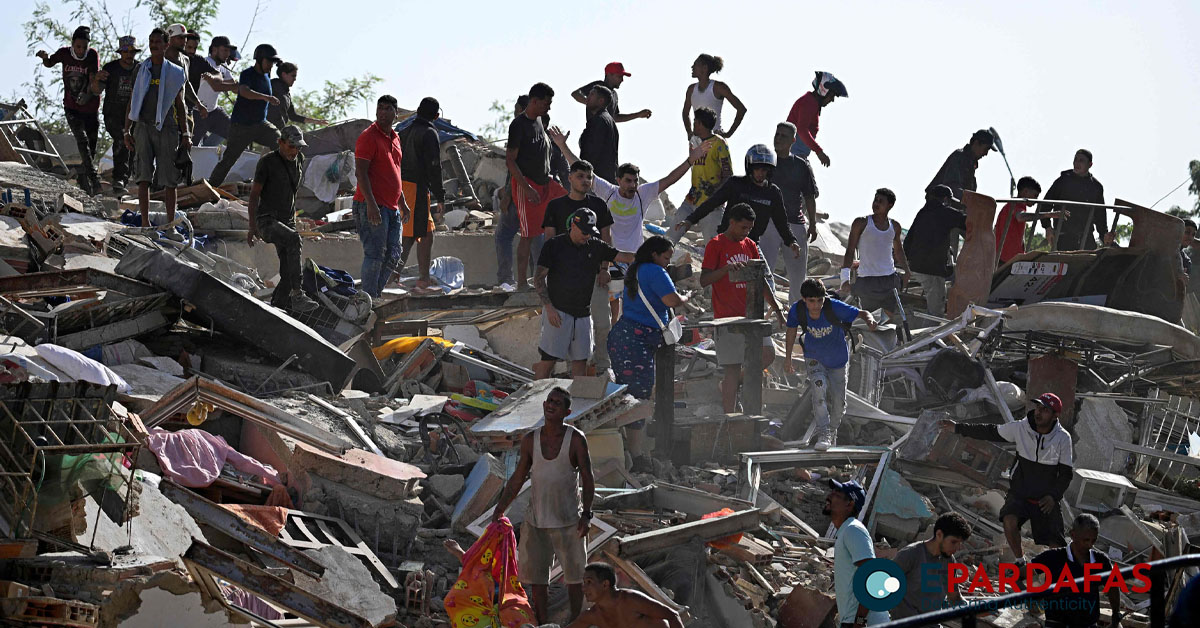
CARACAS — The situation on the ground in Venezuela has rapidly evolved into a severe humanitarian and logistics crisis following the historic June 24 "doublet" earthquakes. Venezuelan Health Minister Carlos Alvarado confirmed that the official death toll has risen to at least 235 people, with more than 4,300 others treated for injuries across the country's overwhelmed health facilities.
Officials warn that these numbers are expected to climb significantly as emergency crews and desperate citizens continue to dig through the rubble of collapsed buildings, while independent databases estimate that thousands of people remain unaccounted for or trapped. Among the confirmed casualties are several foreign nationals, including citizens from Spain, Brazil, China, Italy, and Portugal.
The physical destruction has pushed the nation's fragile public infrastructure to its absolute breaking point. More than thirty aftershocks have continued to rattle the region, terrifying residents and complicating rescue operations in heavily hit urban zones like Caracas and the disaster-stricken coast of La Guaira, where over 250 residential buildings collapsed.
International aid has begun arriving, with emergency rescue teams mobilizing from neighboring Colombia, the European Union, and the Dominican Republic. However, these deployments face massive bottlenecks because the Simón Bolívar International Airport in Maiquetía remains largely closed due to severe structural damage, leaving limited runway capacity for incoming relief supplies.
Compounding the natural disaster is an immediate threat to public health. With major water lines, power grids, and telecommunication networks completely shattered, UNICEF reports that thousands of displaced families are left without access to clean drinking water or functional sanitation, exponentially raising the risk of waterborne disease outbreaks.
Local hospitals—which were already operating under severe constraints—are now running on emergency power, struggling to treat the thousands of injured citizens while facing critical shortages of medical supplies.