
Nepal's Passport Scandal: Background and the Current Crisis

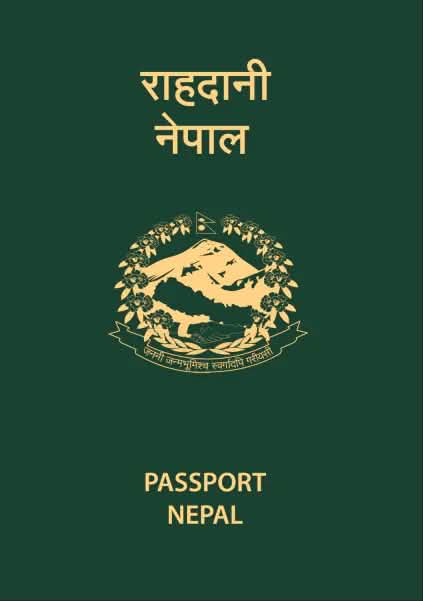
The passport issue currently being widely discussed in Nepal has a detailed history. In 2010, after the Government of Nepal decided to cancel a direct agreement with the Indian government to print Nepali passports at the Indian Security Press in Nashik, the then Ministry of Foreign Affairs launched the Machine Readable Passport (MRP) project.
Following the selection of Oberthur Technology in the bidding process, Nepal implemented MRPs in 2010. Since then, more than 10 million passports have been effectively distributed. The Director General of the Department of Passports even received various honors, including the President's Medal. These achievements were the result of the smooth and reliable technology provided by Oberthur Technology, although the company's contribution often went unnoticed.
In 2020, during the COVID-19 pandemic, the Government of Nepal invited bids for the procurement of 50 million passport booklets with the aim of introducing a new passport system. However, on the final day for submitting bids, the government controversially cancelled the tender.
Following this, the government tried to push forward the Security Printing Center (SPC) project, but that project also became mired in controversy after an audio recording was leaked involving the then Minister for Communication and Information Technology, Gokul Baskota, discussing a financial transaction exceeding 700 million rupees.
Facing a shortage of MRP passports, the government issued a tender for the procurement of 2 million passport booklets and the related system. The French company Idemia won the contract by submitting the lowest qualified financial bid and supplied the passports on time despite the challenges posed by the pandemic.
After the initial supply of 2 million passports was completed, the Department of Passports faced various difficulties in issuing a new tender. Therefore, additional passports had to be re-purchased through a 'variation order' with the French company.
In 2025, the government led by KP Sharma Oli issued a new tender where the contract was divided into two parts. Allegations surfaced involving coalition partners, including Foreign Minister Arzu Deuba Rana and KP Sharma Oli. She was accused of influencing the Department of Passports and the Ministry of Foreign Affairs to favor German printing companies connected to her close associates over the French company. Among those close associates, Siddhartha Thapa, the son of former minister Sunil Thapa, was reportedly involved.
Amid allegations that an unqualified bid violating more than 70 conditions was accepted, the Department of Passports declared the company qualified and signed the agreement, even while a corruption case regarding the matter was ongoing in court. Ultimately, the government finalized the agreement with the German companies in July 2025.
Later, due to widespread public protests, the KP Oli-led government was removed, and an interim government was formed under the leadership of former Chief Justice Sushila Karki. Two months after taking office, she realized that the country was about to face a severe passport shortage.
When the German companies failed to supply the passports as per the agreement, the interim government sought assistance from Idemia. The French company smoothed out the passport distribution once again by providing additional passports and services.
In March 2025, elections were held in Nepal, in which the Rastriya Swatantra Party (RSP) secured a significant majority, and a new government was formed under Balen's leadership. However, before the government could complete its first 100 days in office, the country fell into a severe crisis because the passport supply contract awarded to the German companies through the controversial process remained unfulfilled.
Currently, it is said that fewer than 50,000 passports are left in the government store. Providing passports to citizens going abroad for foreign employment and medical treatment has become highly sensitive. Since the current stock is sufficient for less than a month and it will take at least two months for a new supply to arrive, the current government might once again have to rush a passport supply with the assistance of the French company.
Kojagrat Purnima is being celebrated nationwide today
October 25, 2026
Traffic Police Penalize 336 Drivers in 24 Hours
October 24, 2026
BP Highway Reopens After Debris Cleared
October 10, 2026