A Strange Economy of Nepal: Remittance, Trade Imbalance, Corruption, and National Survival Challenge

-1762666201.jpeg)
By Dr. Saroj Joshi
Nepal is a fragile economy where survival depends heavily on external labor income rather than internal production capacity. National stability, household consumption, and foreign currency inflows are shaped more by remittance from citizens working abroad than by domestic industrial productivity.
Around three to four million Nepalis working abroad support nearly twenty million people at home directly and indirectly. Annual remittance inflows are around $14 billion USD, close to the national budget and a major share of GDP. For millions of families this income covers food, education, healthcare, housing, debt repayment, and daily living costs. Remittance has become a structural pillar of national survival.
This creates a system where a relatively small external workforce supports the consumption needs of a much larger population inside the country. While this has helped reduce poverty and maintain liquidity, it also reveals a deep structural weakness in domestic job creation and industrial capacity.
Nepal also faces a severe and persistent trade deficit. Imports exceed exports by several times with deficits exceeding NPR 1 trillion in recent years. The country imports fuel, vehicles, electronics, medicine, machinery, and essential goods while exports remain narrow and weak. This imbalance continuously drains foreign currency and increases dependence on remittance, tourism, borrowing, and external inflows to maintain stability.
As a result Nepal has become consumption driven rather than production driven. Remittance sustains imports and prevents economic collapse but does not replace industrial productivity, export growth, or employment generation. This creates a paradox of stability without strong internal economic strength.
The national budget of Nepal is broadly comparable to annual remittance inflows. While remittance is private income the government benefits indirectly through VAT customs duties taxes and economic circulation generated by spending. A significant share of public revenue is linked to remittance driven consumption.
However this model carries serious risks. Nepal cannot indefinitely rely on exporting its labor force while importing most essential goods. External shocks such as global recessions immigration restrictions labor policy changes and automation can directly reduce remittance inflows and threaten national stability.
Decades of weak governance policy inconsistency bureaucratic inefficiency and corruption have deepened this structural imbalance. Corruption has increased project costs reduced infrastructure quality discouraged investment and weakened public trust. Instead of building productive systems development has remained fragmented and inconsistent.
As a result millions of Nepalis have been forced abroad due to lack of domestic opportunity. Nearly five million Nepalis abroad now represent both economic support and national loss. While migration reduces unemployment pressure and supports families it also creates labor shortages at home and contributes to brain drain weakening innovation skills and long term competitiveness.
This continued outflow of talent poses a serious risk. If productive human capital continues leaving without replacement Nepal risks losing not only labor but also future innovators and nation builders. Long term national progress becomes difficult when the most active workforce is permanently exported.
Despite this Nepal holds strong potential in hydropower agriculture tourism manufacturing logistics healthcare education technology and energy. But potential alone is not enough without reform execution and long term vision.
The solutions are clear. Nepal must develop domestic industries modernize agriculture expand hydropower and energy exports and reduce import dependence through targeted substitution. Industrial zones transport systems logistics and investment frameworks must be strengthened to generate internal employment.
Governance reform is equally essential. Reducing corruption improving transparency strengthening accountability and ensuring merit based systems are necessary to restore trust and attract investment. Education and skill development must align with domestic industry needs rather than preparing citizens mainly for foreign labor markets.
Reverse brain drain must become a national priority enabling skilled Nepalis abroad to return invest innovate or contribute remotely. Nepal must rebuild confidence in domestic opportunity and shift from dependency to productivity.
Future business contracts and investments must prioritize Nepal national interest ensuring fair benefit transparency and long term development. National resources including hydropower agriculture infrastructure education healthcare and strategic industries must be managed responsibly with zero corruption zero hidden commissions and zero misuse of public resources.
The reality is urgent. Nepal still has a narrow window of opportunity but time labor force and national capacity are shrinking. The current system may sustain survival temporarily but not long term prosperity or strength.
The message is clear. Either act right now to save Nepal with a new dynamic and brilliant economic model beyond the conventional system, or Nepal enters a critical path that threatens collapse of its economic, social, and defense structure and ultimately the very existence of Nepal itself.




NPL Ticket Prices Announced
October 23, 2026
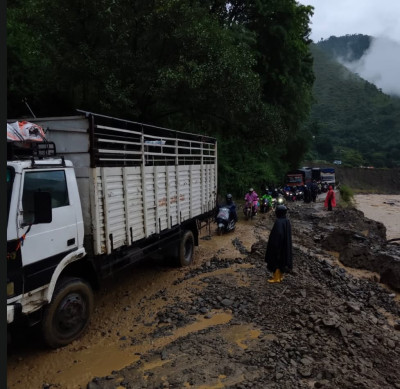
BP Highway Reopens After Debris Cleared
October 10, 2026