Ganga Dussehra Festival Being Celebrated, Here Is The Religious Significance

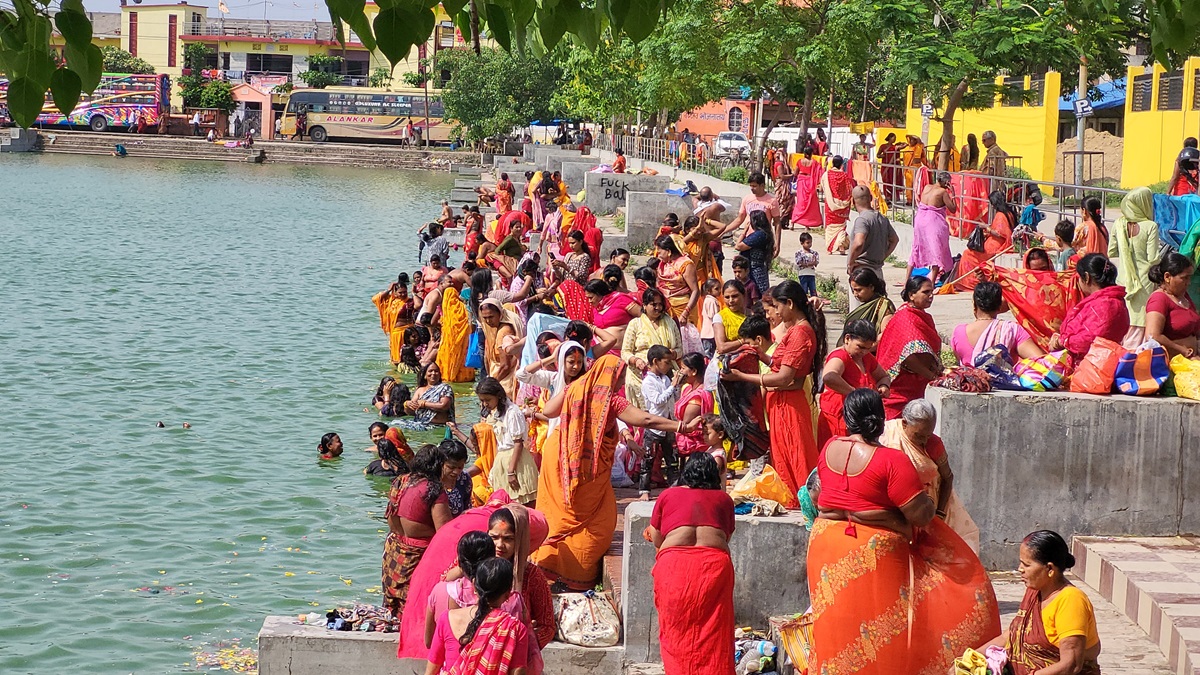
Janakpur. Hindu devotees in the eastern plains are celebrating the Ganga Dussehra festival today. This festival is celebrated with special enthusiasm in the Madhesh Province, including Janakpurdham. Celebrated across Nepal and India, the Ganga Dussehra festival is observed with special worship and prayers at Ganga Ghats, Janakpurdham's Gangasagar and Dasharath Talau, and Patna Ghat in India.
It is believed that Goddess Ganga descended to Earth on this very day. In this worship, there is a tradition of offering 10 flowers, 10 lamps, 10 fruits, and 10 types of food offerings (Naived). Although there are various religious stories and legends surrounding the origin of Ganga, Ganga Dussehra is primarily celebrated because Ganga came to Earth on this day.
According to Hindu mythological texts, the Suryavanshi Emperor Sagar had organized an Ashwamedh Yagna. After Indra stole the sacrificial horse and hid it in the ashram of Sage Kapil, Sagara's 60,000 sons, who went searching for the horse, disturbed the sage while he was in deep meditation.
Due to the sage's wrath, they were all burnt to ashes and their souls could not achieve liberation. Later, King Bhagirath, a descendant of the same King Sagar, performed rigorous penance for the salvation of his ancestors and brought Goddess Ganga down to Earth. Religious texts mention that because the force of Ganga was immense, Lord Shiva held her in his matted hair to prevent a catastrophe on Earth, and only then allowed Ganga to flow onto the land.
Goddess Ganga touched the ashes of Sagara's sons and granted them salvation. For this reason, according to Ram Roshan Das, the Chhote Mahant of Janaki Temple, there is a religious belief that bathing in rivers, ponds, or lakes on this day destroys 10 types of sins (committed through five actions and five thoughts) and leads to the attainment of salvation.
He stated that taking a holy dip in Janakpurdham's Gangasagar pond and Dasharath Talau is considered purifying. On this day, devotees take daily baths in rivers, ponds, and lakes for ten days.
-1762666201.jpeg)

-1762666201.jpeg)

House of Representatives Meeting Adjourned
August 25, 2026
Gold Price Drops Slightly
August 25, 2026
Three Arrested with Around 367 Kg of Marijuana
August 25, 2026
Iran Claims to Have Doubled Weapon Production
August 23, 2026
House of Representatives Meeting Adjourned
August 25, 2026
Gold Price Drops Slightly
August 25, 2026