A Vision for a Strong United and Future Ready Nepal

-1762666201.jpeg)
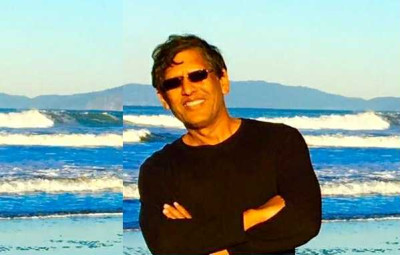
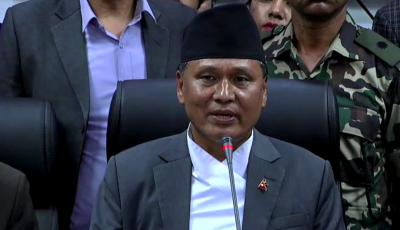
Dr Saroj K Joshi
Nepal is currently facing political tension internal disagreement and destructive criticism that is slowing national progress. This situation must change because a nation cannot move forward when energy is spent on division instead of development. Constructive criticism is necessary but it must always aim to improve systems not block progress
The time has come for Nepal to move beyond repetitive political conflict and focus on nation building. The country has already lost valuable decades due to instability and short term thinking while other nations have advanced through discipline long term vision and strong institutions
Despite these challenges Nepal holds a major strength in its people. The country has tremendous human capital including skilled engineers scientists managers technicians and professionals both within Nepal and across the global Nepalese diaspora. This talent is one of the country’s greatest national assets
Nepal is still not a poor country in true potential terms. Despite misuse of resources and historical territorial and developmental setbacks, it remains rich in many dimensions. It has one of the highest hydropower potentials by density in the world, vast river systems, fertile agricultural land, rich biodiversity, tourism potential, and a highly strategic geographic position between major economic regions.
It also has strong renewable energy potential including large scale solar farm opportunities in suitable southwest facing terrains, wind energy potential in selected corridors, and other emerging clean energy sources that can support long term self sufficiency
In line with earlier discussions referenced in Dr Saroj K Joshi’s work, Nepal’s geological potential also includes strategic mineral resources that require scientific validation and transparent national level study. These include previously discussed uranium isotopes such as uranium 234, uranium 235, and uranium 238 in certain geological formations. Such resources, if confirmed, must be handled with strict scientific governance, safety standards, and national interest protection
The core issue is not lack of wealth, but underutilization and weak systems of development, governance, and execution
A strong national strategy must now focus on recognizing connecting and mobilizing talent. Reverse brain drain should be a national priority where Nepal actively engages its global professionals encourages collaboration and creates pathways for knowledge transfer contribution and participation in national development. A nation becomes powerful when it fully uses the capability of its own people
Nepal must adopt a mindset where country and people come first. No interest no group and no external influence should bypass this principle. National priority must always remain above personal or external interests
A guiding principle for this direction is the standard of zero commissions zero emissions and zero corruption. This is not only a policy idea but a long term national ethic that must guide governance development and institutions across generations. Without this foundation it is not possible to build an elite prosperous and secure nation
We must eliminate the current national deadlock through collective effort and move forward with a big vision thinking mindset. This requires sacrifice of small personal positions and interests in favor of positioning for the development of the entire nation.
It is a call for a broad national and even revolutionary style campaign where differences are acknowledged but unity is prioritized for progress. Only the people of Nepal can truly solve Nepal’s internal problems and build the country, as history has shown that over reliance on external direction does not resolve core national challenges
“Zero commissions zero emissions and zero corruption must become the national standard from present to future generations. Without it, an elite, prosperous, peaceful and secure nation is not possible.”
— Dr Saroj K Joshi
This principle represents a direction for present and future generations. It demands transparency accountability and discipline in all systems including governance economy and infrastructure development
Nepal must focus on building a strong science based education system strengthening merit based governance developing infrastructure and production capacity and integrating modern technology with innovation
National unity is essential. Differences in politics and ideas should not divide the country but strengthen decision making and systems. A stable and focused nation is only possible when all sectors work toward a shared national purpose
Nepal has natural resources strategic geography and most importantly capable people. With unity discipline and long term vision the country can move from instability to strength and from fragmentation to progress
The future of Nepal depends on clarity of purpose national responsibility and collective effort. This is a moment for transformation and determined action
-1762666201.jpeg)
-1762666201.jpeg)

Iran Claims to Have Doubled Weapon Production
August 23, 2026

Man Arrested for Character Assassination of a Minor
August 22, 2026