
Everest Trail in Peril: Dilapidated Bridge Poses Risk to Tourists and Locals

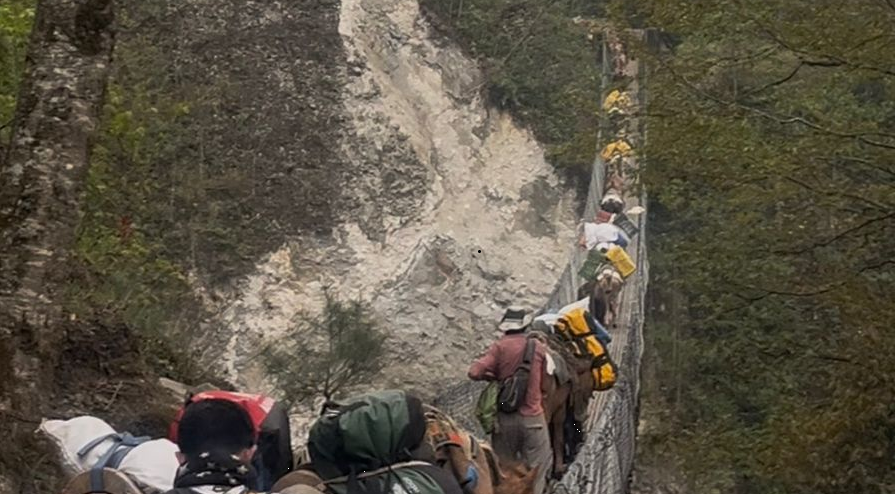
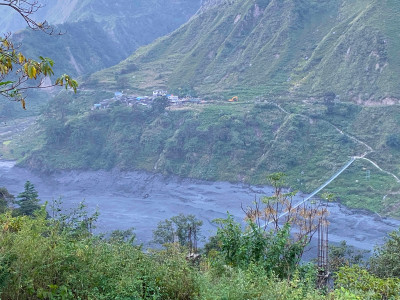
Solukhumbu: The 'Nachipang Bridge' located at Thadokoshi in Khumbu Pasang Lhamu Rural Municipality-3, a key point on the trail to Mount Everest, the world's highest peak, has reached a dilapidated and dangerous state. Hundreds of tourists, local residents, porters, and mules are compelled to cross this bridge daily, as it remains a primary pedestrian route toward Everest.
Since transportation options in the Khumbu region are extremely limited—restricted to mules, porters, or helicopters—this bridge serves as a mandatory passage for everyone, including students and teachers commuting to school.
It is a tragedy that this bridge, constructed about 26 or 27 years ago, is now so worn out that the risk of an accident occurring at any moment has significantly increased. Interestingly and concerningly, there is a dry landslide beneath the bridge rather than a flowing river, further compromising the structural integrity.
According to local resident Lakpa Sherpa, the bridge was built when she was 10 or 11 years old, and now, at age 37, it is still being used without any significant maintenance. She complained that even when the rural municipality or other organizations attempted repairs, they only performed superficial work like tying wire mesh.
Beyond the physical condition of the bridge, sanitation has become another major issue. Mules traversing this path leave the bridge and the surrounding trail foul-smelling, causing additional discomfort, particularly for foreign tourists. Local hotelier Pasang Sherpa noted that the local government alone is not enough to solve this problem; the state must take the lead. He added that locals are ready to contribute their own labor for the cause.
The pathetic condition of basic infrastructure on a route of such international importance is a sign of serious negligence. Sanjiv Bishwokarma from Sotang, who has been making a living as a porter for the past two years, shared that they often have to wait a long time to cross the bridge with heavy loads. Sometimes, 50 to 60 mules are crossed at once, forcing porters and tourists to wait and making the journey even more difficult.
Mount Everest is a major source of tourism revenue for Nepal, yet it is ironic that the very path leading to it is unsafe. Constructing a secure, strong new bridge and arranging alternative routes has become an immediate necessity. The question remains: why is the path to a destination that attracts the world so hazardous? Where does the royalty collected from Mount Everest go?

Kojagrat Purnima is being celebrated nationwide today
October 25, 2026
Traffic Police Penalize 336 Drivers in 24 Hours
October 24, 2026
BP Highway Reopens After Debris Cleared
October 10, 2026