High-Stakes Electoral Battle in Jhapa-2: A Convergence of Political Heavyweights

Biratnagar. Jhapa, a district in Koshi Province, is being viewed as the country's focal point for the upcoming House of Representatives elections scheduled for March 5. The area has become a major topic of discussion as two prime ministerial candidates are contesting from the same district.
The electoral competition between former Prime Minister and CPN (UML) Chairman KP Sharma Oli and senior RSVP leader Balen Shah in Jhapa has become a matter of intense public interest. However, their specific battleground is Jhapa Constituency No. 5.
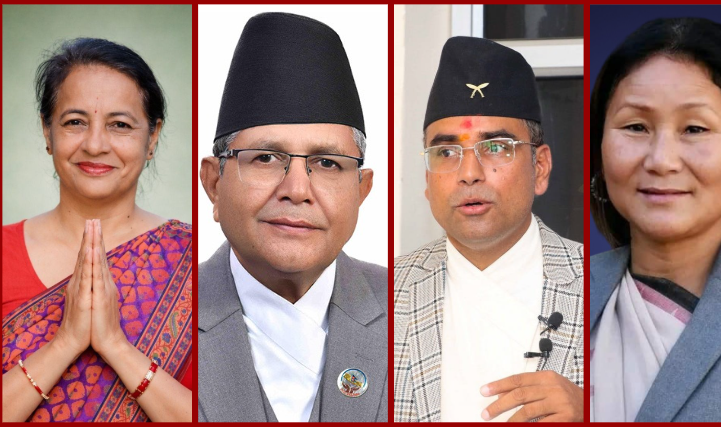
While fierce competition unfolds in Jhapa-5, the district's Constituency No. 2 has also turned into an electoral 'hotspot.' The competition in Jhapa-2 is becoming increasingly fascinating as the former Speaker and Deputy Speaker, a former minister, legal experts, social activists, and leaders of alternative political movements face off in the same constituency.
In this region, 18 candidates, including representatives from 15 political parties and three independents, are in the electoral fray. According to local journalist Surendra Bhandari, it is not just the number of candidates but their political status, personality, and past influence that have made Jhapa-2 a center of multi-dimensional competition.
Devraj Ghimire: The Strength of Organization and Power
Devraj Ghimire, the candidate from CPN (UML), is the most prominent figure in this election. Having won the 2079 election with 28,716 votes, Ghimire established himself in national politics after becoming the Speaker of the House of Representatives. In a region that is the home district of UML Chairman KP Sharma Oli and possesses a strong organizational base, Ghimire’s candidacy is seen as a symbol of the party's institutional strength and continuity.
Ghimire is seeking a fresh mandate by claiming that he moved forward infrastructure projects such as road expansion, fencing in elephant-affected areas, and four-lane road projects during his short tenure.
Indira Rana Magar: A Direct Test for the Alternative
Indira Rana Magar, the candidate from the Rastriya Swatantra Party (RSVP), is another central figure in this election. Having entered parliament through the proportional representation system and rising to the position of Deputy Speaker, this election has become a matter of prestige for her.
The contest is particularly notable because Ghimire and Rana served as Speaker and Deputy Speaker during the same term. Rana, who entered politics from social activism, is presenting herself as a voice for inclusive and social justice, distinct from traditional parties. Her popularity is reportedly growing among urban voters, women, and youth seeking change.
However, the lack of a strong organizational structure and the fact that this is RSP's first major test in a direct election remain her primary challenges.
Bhadra Prasad Nepal: A Comeback from a 'Close Defeat'?
Bhadra Prasad Nepal, who secured second place in the previous election as an independent candidate with 26,455 votes, is in the field this time representing the Rastriya Prajatantra Party (RPP).
In 2079, his vote margin behind the victorious candidate Ghimire was only 2,261. That result indicated that the alternative political trend was strong in Jhapa-2. There is widespread interest in whether Nepal, now armed with a party organization and a clear agenda, can turn his previous 'close defeat' into a victory. However, since the rise of RSP, he also faces the risk of alternative votes being split.
Congress Struggling to Maintain Presence
Nepali Congress candidate Sarita Prasai and Nepali Communist Party candidate and former minister Dharmashila Chapagain are also competing in this election. Prasai is known as an experienced leader for the Congress in a region that is considered relatively weak for the party.
In the previous election, during the alliance with the then-Maoists, Congress had left this seat to the Maoists. The candidate then, Hari Kumar Rana Magar, received 13,930 votes. With the dissolution of the previous alliance, it appears that votes from the Congress and Maoist streams may be divided. Nevertheless, Prasai is campaigning with a commitment to a reformed Congress.
Fragmented Votes and the Decisive Youth
Jhapa-2, which includes Birtamode, Arjundhara Municipality, two wards of Kankai Municipality, and four wards of Buddhashanti Rural Municipality, has a total of 147,522 voters.
Youth voters appear attracted to development, employment, and alternative political leadership. It is estimated that this group could provide a decisive turn to the election results. Due to the multi-party competition, there is a strong possibility of vote fragmentation, which leaves the door open for unexpected results.
In the previous House of Representatives election, CPN (UML) was the leading party in the proportional representation category. UML received 26,490 proportional votes, while RSP received 22,517.
The Congress, in third place, received 15,498 votes. Meanwhile, RPP had 7,880 votes, while the combined votes of the then-Maoist and Unified Socialist parties stood at 5,028.

Overnight Rescue Operations Underway at Chilime Tunnel
September 14, 2026
Nepal Esports League Added to Calendar
September 14, 2026
National Children's Rights Day Being Celebrated
September 14, 2026
Bhotekoshi Flood: 1,386 Bodies Recovered
September 13, 2026
Overnight Rescue Operations Underway at Chilime Tunnel
September 14, 2026
National Children's Rights Day Being Celebrated
September 14, 2026
Bhotekoshi Flood: 1,386 Bodies Recovered
September 13, 2026