Annapurna Rural Municipality Listens to Local Grievances: Citizens Raise Questions on Agriculture, Roads, Water, and Taxes

-1765967449.jpg)
Pokhara: Annapurna Rural Municipality of Kaski organized a public hearing on Monday to discuss the progress of the first quadrimester of the current fiscal year 2082/083.
During the program held at the Ward No. 5 office in Jhobang, Chief Administrative Officer Chiranjivi Baral presented the first quadrimester progress report. In the report, he provided detailed statistical information regarding major achievements, budget expenditure status, and improvements observed in service delivery during this period.
Following the presentation, ward residents pointed out issues related to road construction, land management, disaster management, the taxation system, agricultural subsidies, and drinking water projects.
Local resident Narahari Paudel questioned the condition of the road connecting the center to Mauja via Girichoke and the accountability of the contractors. Dhurba Raj Paudel demanded clarity on monitoring responsibilities for projects funded by the federal and provincial governments.
Expressing serious concern over land management issues, Hari Bahadur KC mentioned that no cadastral survey has been conducted since 2036 BS. He highlighted the hardships faced by citizens because land records are not updated (deducted) despite development projects taking place on their land.
He further noted that a 6-meter road had narrowed to 3 meters within two years and urged the local government to take immediate action. Sahabir BK stated that a decision from the Disaster Management Committee is required to build a bridge in Sanjhkhola after a landslide washed away the road. He also complained about inequalities in the tax system for organizations.
Similarly, Gobinda Mani Paudel raised issues regarding double fees in the online birth registration process, high child tax rates in rural areas, the need to reduce property taxes, and the necessity of continuing agricultural subsidies. He demanded transparency in the budget expenditure for the Girichoke-Mauja-Parbat road and requested irrigation projects for the Dhobang plains.
Nahendra Bahadur Chhetri pointed out that the Landruk drinking water project is stranded due to a lack of land, despite large sums being spent on the Detailed Project Report (DPR). Devi Paudel highlighted the need for extra classes to ensure quality education and the installation of water taps for Euroguard filters in schools.
Ishwar Bahadur Chhetri demanded that disaster management equipment be kept at the ward office itself. Kalika Devi Paudel complained that she had not received relief after her house was destroyed in the 2078-79 BS floods.
Responding to the grievances raised by the locals, Rural Municipality Chairperson Bishnu Bahadur KC committed to moving forward with planned solutions within the municipality’s resources and legal framework.
"We are working within our resources and legal procedures," he said. He assured that he would issue directives to contractors, coordinate with the Land Revenue Office, call a meeting of the Disaster Management Committee, organize the tax system, and resolve the issue of double fees for birth registration. He also gave assurances regarding the review of property taxes and the continuity of agricultural subsidies.
He further stated that budget would be immediately allocated for repairing computers at Shitala School, coordination would be made with the ward for land management for the Landruk water project, and renewed efforts would be made to provide relief to flood victims. He expressed confidence in ensuring local benefits by formulating policies for the proper utilization of natural resources.
Welcoming the attendees, Ward No. 5 Chairperson Jibanath Paudel said that public hearings increase public participation and the accountability of local levels.
Answering questions raised during the program, he stated that the ward would prioritize essential needs such as roads, drinking water, education, and agriculture. He also expressed his commitment to implementing projects while keeping the suggestions and complaints of the residents in mind.
The program, which strengthens direct dialogue between the local government and the public, appears to have documented public opinion to shape the future policies of Annapurna Rural Municipality. The program was moderated by journalist Sagar Dhakal on behalf of Aama Publication Media.
-1765967452.jpg)
-1765967392.jpg)
-1765967392.jpg)
Overnight Rescue Operations Underway at Chilime Tunnel
September 14, 2026
Nepal Esports League Added to Calendar
September 14, 2026
National Children's Rights Day Being Celebrated
September 14, 2026
Bhotekoshi Flood: 1,386 Bodies Recovered
September 13, 2026
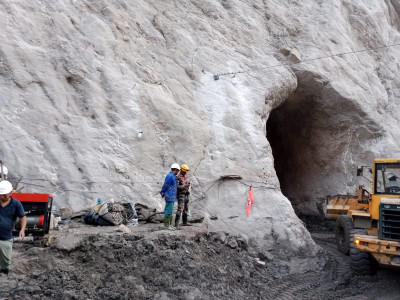
Overnight Rescue Operations Underway at Chilime Tunnel
September 14, 2026
National Children's Rights Day Being Celebrated
September 14, 2026
Bhotekoshi Flood: 1,386 Bodies Recovered
September 13, 2026