High Pesticide Residue Found in Broad-Leaf Mustard (Rayo ko Saag), Directive Issued for Destruction

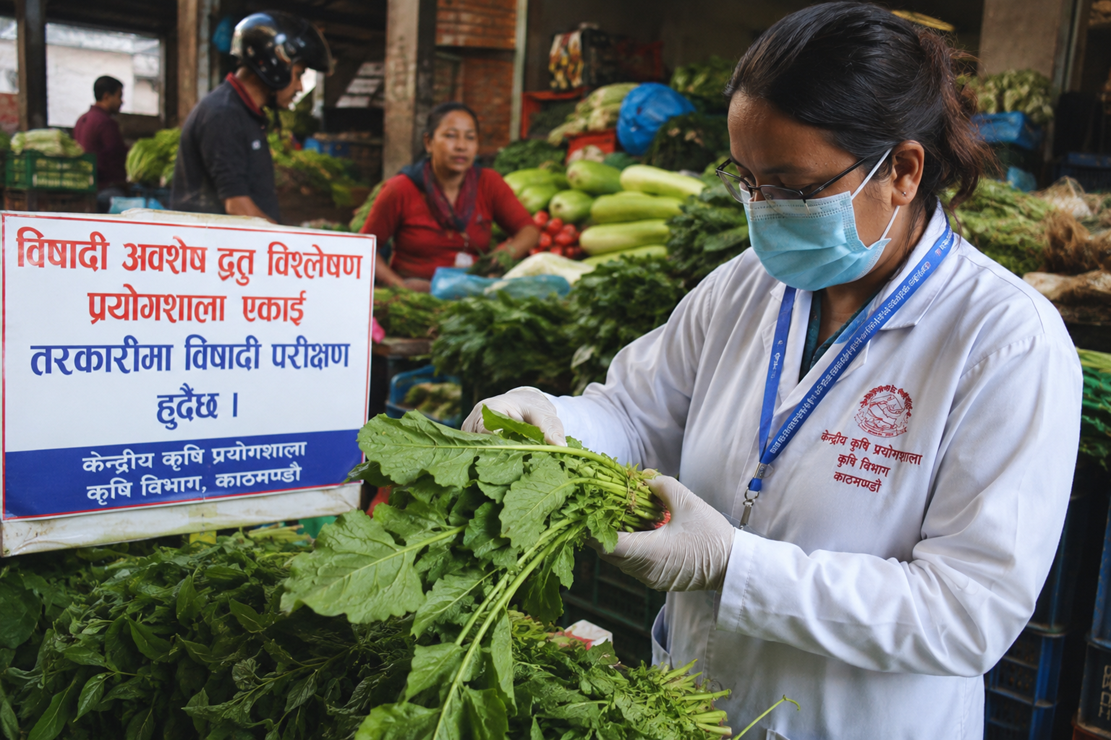
During a routine pesticide screening at the Kalimati Fruits and Vegetables Market in Kathmandu, broad-leaf mustard (Rayo ko Saag) brought from Bhaktapur was found to contain pesticide residues exceeding the prescribed standards.
According to the test report released on Asar 16 by the Rapid Pesticide Residue Analysis Laboratory Unit under the Central Agricultural Laboratory of the Department of Agriculture (Ministry of Agriculture and Livestock Development), broad-leaf mustard brought from Madhyapur Thimi Municipality, Bhaktapur, was found to have an organophosphate pesticide level of 80.016%. Consequently, the sample was categorized under the "to be disposed of" classification.
The report states that the sample belonged to the produce of farmer Sita Regmi. After being declared unfit for consumption during the testing at Kalimati, a decision was made to destroy it. The laboratory had tested a total of 12 vegetable samples today. The tested samples included broad-leaf mustard, green onion, fiddlehead fern (niguro), cucumber, coriander leaves, sponge gourd (ghiraula), and tomatoes.
The laboratory stated that the remaining 11 samples were within the safe limit for consumption. Since the pesticide levels in those samples were below the prescribed limit, they were deemed fit for sale and consumption in the market.
Pesticide Classification Standards
The laboratory categorizes vegetables into three distinct groups based on pesticide residues. Vegetables with pesticide residue below 35% are deemed safe and completely fit for consumption. If the pesticide levels fall between 35% and 45%, the produce is held in quarantine for a few days and re-tested before being cleared. However, any vegetables showing a pesticide level above 45% are declared entirely unsafe for consumption, categorized for immediate disposal, and must be destroyed.

-1781497155.jpeg)

India Celebrates 80th Independence Day
August 15, 2026
-1786777875.jpeg)

Energy Minister's Advisory Group Fully Formed
August 14, 2026