The Real Graduation Begins After the Degree

-1762666201.jpeg)
By Saroj K. Joshi, PE, PhD
Engineering consulting without insight, knowledge, experience, and without the humility to admit one’s own weaknesses can become a disaster. It will not take you far.
Once, earning an engineering degree felt like pride. Receiving a professional engineering license felt like celebration. It was exciting. It was an achievement. It was, in many ways, fun.
But the seriousness began when I met a 77-year-old field engineer named Ralph Frame.
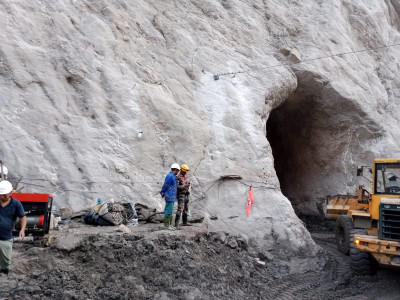
He did not teach from a classroom podium. He taught in the field, digging ground, installing poles, erecting transmission structures, spreading seeds for environmental protection after construction, and personally verifying grounding systems of transmission line poles. There was no glamour in the mud, sweat, or responsibility. But there was integrity. There was discipline. There was accountability.
That was the turning point.
Engineering is not entertainment. It is a serious profession deeply connected with multiple disciplines. A single design decision can create either cascade failure or cascade success. Every project touches safety, environment, economics, law, client relationships, deadlines, and strict code compliance, including the smallest details.
From that moment, I realized something profound.
A college degree, even a PhD, is only the foundation. Professional engineering is not the peak; it is the beginning. Real graduation takes decades. The true examinations are not written tests but life situations, field decisions, ethical dilemmas, technical crises, and moments when courage is required.
I still remember the words of my professor Sidlechki at graduation:
“Congrats, Saroj, you have graduated. But real graduation will demand decades. Soon, the real tests and exams of your life will begin. Good luck.”
It took me twenty years of practice to fully understand that statement.
Engineering consulting is a demanding profession. It requires high performance knowledge, attention to tiny details, interpretation of vast codes and standards, client diplomacy, strategic decision making, and moral clarity. Sometimes you are rewarded. Sometimes you are blamed. In both cases, learning never ends.
One fundamental truth stands above all:
You will never succeed by hiding mistakes.
Engineering is applied science. A code violation, a miscalculation, or a concealed design error will eventually surface. It will come back to you in the worst way one can imagine.
Ralph once told me,
“Mr. Joshi, in electrical engineering, you often get only one chance.”
Another respected professor Prachovnic said,
“Do not hide. Do not lie. Do not hesitate to admit your mistake. Accept it and correct it immediately. Otherwise it will come back to you in the worst way one can imagine.”
Those words are engraved in my professional life.
History gives us painful reminders. The disaster at the Chernobyl disaster was not merely a technical issue. It was a combination of human factors, pressure, suppression of concerns, and most importantly a forced engineering error that could have been avoided. Authority overrode engineering judgment. Experience was ignored. Operational concerns were dismissed.
In my understanding and looking into the Chernobyl accident, the most critical lesson is that engineering decisions must never be forced against technical reasoning. When authority silences expertise and engineers are pressured to proceed despite known risks, the outcome can become catastrophic.
We must learn from such events. Engineering errors mixed with pressure, arrogance, and inexperience can escalate into disasters that affect generations.
Another hard truth must be stated clearly. A corrupt mind and a wrong attitude are imminent disasters in engineering. Technical mistakes can sometimes be corrected, but a compromised mindset destroys judgment at its root. An engineer must strive to be the best, not only in knowledge but in character. The attitude must be pure, transparent, and clear like crystal. Integrity is not an accessory to engineering; it is its foundation.
As engineers, our duty is not only to design systems but to protect society. We must expose problems as they are. Fix them before they escalate. Speak when something is wrong. Uphold moral ethics even under pressure.
Engineering is technical excellence combined with integrity, client responsibility, strategy, and courage.
After two decades, I can say with certainty that I am still a student. The learning never ends.
To all engineers, young and experienced, remember:
Admit mistakes. Correct them early. Follow the code. Respect the field. Protect the public. Remain humble. Keep your mind clear and your character uncompromised.
Because seriousness in engineering is not optional. It is our obligation.
-1762666201.jpeg)