WHY POLITICAL IDEOLOGY DISBURSE IN CITIZEN?

Political ideology rarely develops as a uniform belief system among citizens because social reality itself is uneven. Individuals experience the state, economy, and society through different positions shaped by class, geography, identity, education, and historical memory.
These lived experiences influence how people understand power, justice, governance, and the responsibilities of the state. As a result, political beliefs emerge not from abstract theory alone but from everyday encounters with opportunity, exclusion, security, and change.
This article argues that ideological dispersion is a natural outcome of social and economic inequality, historical trajectories, and shifting political performance. Using comparative examples from developed and developing countries, with particular emphasis on Nepal, the study examines how ideology evolves from a force of collective struggle to a more pragmatic and performance-driven orientation.
The analysis highlights the changing nature of political ideology in Nepal, where citizens increasingly evaluate ideas through lived outcomes rather than symbolic commitments.
Keywords: Political ideology, ideological dispersion, lived experience, inequality, governance, Nepal, political transformation
Political ideology never spreads evenly across a society because people themselves are not equal in experience, opportunity, or expectation. Their lives are shaped by different social positions, economic realities, cultural backgrounds, and historical memories. Politics, in this sense, is deeply personal. What citizens believe about power, justice, and the role of the state grows from what they encounter in everyday life. When those encounters differ, ideological diversity is inevitable.
This phenomenon exists everywhere, but it appears sharper in societies undergoing rapid political, economic, and social change. Nepal is a clear example of this transformation, where ideology once acted as a unifying force of struggle and now faces growing skepticism and fragmentation.
Ideology and lived reality
At its core, political ideology attempts to answer a few fundamental questions. Who should govern? How resources should be distributed. How much responsibility the state should take for citizens’ welfare. People respond to these questions not as abstract thinkers but as lived beings shaped by class, education, region, religion, identity, and daily struggle. Over time, their responses harden into ideological preferences.
Most citizens do not begin with political theory. A farmer worrying about irrigation, a young graduate searching for employment, and a business owner dealing with taxation will imagine the state very differently. Their political beliefs flow from practical concerns, not philosophical texts. This difference in lived reality is the first and most enduring reason why ideology disperses among citizens.
Inequality as a driver of ideological division
Economic inequality is one of the strongest forces behind ideological dispersion. When citizens experience unequal access to wealth, services, and opportunity, they develop different expectations from the state.
In developed countries, this pattern is visible but moderated by stronger institutions. In the United States, citizens with high incomes and access to private healthcare often favor conservative or libertarian ideologies that emphasize low taxation and limited government.
Meanwhile, working-class communities, minorities, and younger citizens facing student debt and job insecurity tend to support progressive ideologies that call for welfare policies, regulation, and public services. The same political system produces divergent ideologies because material realities differ sharply.
In developing countries, inequality is more pronounced and its political consequences more intense. In India, urban middle classes often align with market-friendly or nationalist ideologies, while rural populations and marginalized communities lean toward socialist or welfare-oriented politics. Their ideological preferences reflect unequal access to land, education, healthcare, and employment.
Nepal follows a similar pattern. Urban professionals and business communities often support liberal democracy and market-based policies. Rural populations, landless farmers, and informal workers historically gravitated toward leftist ideologies, including communism, because those ideologies promised land reform, social justice, and state protection. The Maoist movement drew much of its support from communities that felt excluded from economic opportunity and political power. Ideology, in this context, became a language of survival and hope.
History and collective memory
Political ideology is also shaped by historical experience. Citizens inherit memories of past regimes, movements, and conflicts, which influence how they view the present.
In developed countries like Germany, the experience of Nazism and World War II created a deep ideological commitment to democracy, federalism, and constitutional safeguards. Extreme ideologies are socially discouraged because history exposed their destructive potential.
In many developing countries, ideology gained legitimacy through struggle against domination. In Vietnam and China, communist ideology became closely associated with national liberation and resistance to foreign control. It was not merely an economic doctrine but a symbol of sovereignty and dignity.
Nepal’s ideological landscape cannot be understood without its own history. The Rana autocracy, the Panchayat system, the People’s Movements of 1990 and 2006, and the Maoist insurgency all left strong ideological imprints. Older generations who lived under absolute monarchy often value stability and gradual reform.
Those who participated in revolutionary movements may continue to identify with radical left ideology, viewing it as the force that challenged feudalism and exclusion. Younger citizens, raised in a republican Nepal, are more skeptical of grand ideological promises and often prefer pragmatic, issue-based politics.
Ideology as identity in Nepal’s past
For a long period, ideology in Nepal was inseparable from struggle. Leftist politics appealed to those facing landlessness, caste discrimination, and state neglect. Democracy became an ideology of hope during movements against monarchy. Federalism emerged as a demand for recognition from communities that felt politically invisible.
During these moments, ideology carried moral weight. It offered people a way to explain injustice and a reason to resist it. Supporting a political movement was not simply a choice; it was an identity. This explains why the Maoist movement, despite its violence, gained mass support in certain regions. It spoke directly to people who felt unheard by the state. At that time, ideology felt urgent and meaningful.
The changing nature of ideology in Nepal
Today, Nepal stands at a different moment. Many of the goals that once energized ideology have been formally achieved. The monarchy has been abolished. Nepal is a republic. Federalism is constitutionally guaranteed. Inclusion is officially recognized. Yet public dissatisfaction continues to grow.
This contradiction has transformed how citizens relate to ideology. Increasingly, Nepalis are less concerned with what ideology a party claims to represent and more concerned with whether leaders can deliver roads, jobs, schools, and justice. When communist parties speak of socialism but practice corruption and patronage, ideological credibility erodes. When democratic parties speak of freedom but fail to govern effectively, ideology feels empty.
As a result, ideology in Nepal is becoming thinner and more flexible. Party loyalty is weakening. Voters shift allegiances more easily. Support is often local and personality-based rather than ideological. This does not indicate political apathy. Rather, it reflects growing political pragmatism. Citizens are evaluating politics through performance, not promises.
Youth, migration, and ideological transformation
One of the most powerful forces reshaping political ideology in Nepal is youth migration. Millions of young Nepalis have worked in the Gulf countries, Malaysia, Korea, or studied abroad. They return with varied experiences. Some have seen efficient governance and demand accountability at home. Others have learned to survive independently of the state, lowering expectations altogether.
These experiences weaken traditional ideological narratives. Young people are less inspired by slogans of revolution or abstract socialism. They prioritize opportunity, dignity, mobility, and fairness. Digital media reinforces this shift. Social platforms expose citizens to global political debates while also encouraging skepticism toward political claims and leaders.
This environment has contributed to the rise of alternative and independent political voices in Nepal. Many of these actors deliberately avoid rigid ideological labels. They focus on governance, service delivery, transparency, and competence rather than left or right ideology. This signals not the disappearance of ideology, but its transformation.
Identity politics in a new form
Identity-based ideology remains important in Nepal, but its character has evolved. Madhesi, Janajati, and Dalit movements continue to emphasize inclusion and representation. However, supporters increasingly judge these movements by tangible outcomes rather than symbolic rhetoric. Recognition without material improvement no longer satisfies citizens.
Ideology is now being tested through performance. Citizens are asking difficult questions. Inclusion for what purpose. Federalism for whose benefit. Social justice through which institutions. These questions reflect a more mature and demanding political consciousness.
A broader global pattern
Nepal’s experience mirrors a wider global trend. In countries like France and Italy, traditional ideological parties are losing ground to pragmatic or populist alternatives. In developing countries, this shift is faster because institutions are weaker and public patience is limited.
What makes Nepal distinct is that ideology once carried the weight of liberation and transformation. Its decline therefore feels personal, almost like a broken promise. Citizens are not rejecting politics; they are questioning the gap between ideological language and lived reality.
Final analysis
Political ideology disperses among citizens because societies are unequal in experience, history, and expectation. In developed countries, ideological division often reflects class, education, and cultural debates. In developing countries, it is intensified by inequality, identity politics, and weak institutions.
In Nepal, ideological dispersion stems from rural-urban divides, historical struggles against autocracy, ethnic and regional exclusion, and growing disappointment with political performance. Today, citizens are less driven by rigid ideological commitments and more by practical concerns such as employment, governance, and dignity. Ideology still matters, but it competes directly with lived reality.
This does not mean ideology has lost relevance. It means citizens are no longer willing to accept ideology without evidence. Nepalis are not rejecting ideas themselves; they are rejecting empty ones. The future of political ideology in Nepal will depend less on grand narratives and more on whether those ideas can quietly and consistently improve everyday life.
-1762666201.jpeg)

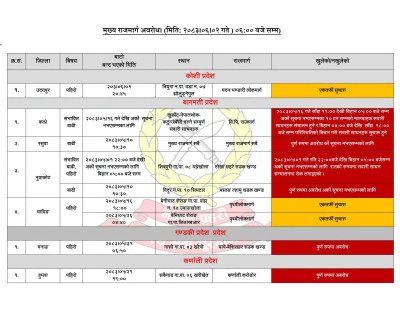
Floods and Landslides Disrupt Major Highways: What’s Blocked, What’s Open?
September 18, 2026
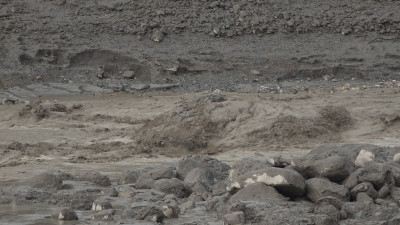
Bhote Koshi Flood Update: 1,409 Bodies Recovered
September 17, 2026