Electrocution in a “Hotel Square” in Patan, Kathmandu, Nepal” - A Technical Responsibility Review


Author: Saroj K. Joshi, P.E., Ph.D.
Chapter 1 — Incident Overview
- In late 2023, a severe electrocution occurred at a hotel swimming pool in Patan (Lalitpur), Nepal.
- Victim: Sajil Man Shakya, who suffered severe electrical injuries and later went into a vegetative coma for several months
- Forensic findings indicated burns consistent with electrocution.
- The incident highlights critical gaps in Nepal’s pool safety and electrical infrastructure.
Chapter 2 — Multi-Layer Responsibility
- Liability spans the entire project lifecycle: design → approval → construction → QC → commissioning → operation.
- Failure in any stage can result in lethal hazards.
- Responsibility is distributed across multiple stakeholders, not solely the hotel owner.
Chapter 3 — Engineering & Design Obligations
- Designers must create safe electrical systems, including grounding, bonding, GFCI/RCD protection, waterproof fixtures, and fault studies.
- Even without Nepal-specific standards, NEC, IEC, and IS codes should guide design.
- Ignoring these standards constitutes design negligence.
Chapter 4 — Contractors & Installers
- Contractors are responsible for faithful execution of designs.
- Submission of compliant materials, raising RFIs for unclear details, and conducting pre-commissioning tests are mandatory.
- Deviations from design or unsafe work → contractor liability.
Chapter 5 — Quality Control & Site Supervision
- QC engineers ensure installations comply with design and safety standards.
- Poor inspection or failure to catch errors creates joint responsibility.
- Supervisors and consulting engineers share accountability for oversight lapses.
Chapter 6 — Government & Regulatory Authorities
- Municipal authorities must review plans and enforce safety compliance.
- Permits should only be issued after thorough verification.
- Inadequate approvals → systemic regulatory responsibility.
Chapter 7 — Hotel Operation & Maintenance
- Hotels must routinely test grounding, breakers, and GFCI systems.
- Negligent upkeep in pools and wet areas → direct operator liability.
- Proper maintenance is essential to prevent preventable accidents.
Chapter 8 — Forensic Investigation Requirements
A thorough investigation examines:
- Single-line diagrams and load schedules
- Grounding and bonding test results
- GFCI/breaker trip records
- As-built drawings and QC logs
- Load and fault calculations
- Waterproofing and equipment integrity
Goal: Identify exactly where safety failed.
Chapter 9 — Justice, Accountability & Compensation
- Immediate compensation to the victim’s family is standard.
- Criminal investigation if negligence is suspected.
- Professional sanctions: license suspension, blacklisting.
- Civil damages cover economic and emotional loss.
- Policy reforms follow to prevent recurrence.
Chapter 10 — Preventing Future Incidents
Electrocution is 100% preventable with proper design, installation, and maintenance.
Nepal requires:
- Updated electrical codes
- Qualified municipal inspectors
- Mandatory third-party testing
- Routine maintenance audits for hotels
Chapter 11 — The Role of Civil Engineering/Lead Architect Amogh S. Manandhar in Advancing Safety Standards in Collaboration with S & P Electrical Engineering Consulting, Inc., California, USA
- Nepal’s hospitality and construction sectors require high technical and safety standards.
- Lead Architect Amogh S. Manandhar, working with S & P Electrical Engineering Consulting, Inc., California, USA, helps integrate global safety standards in Nepali projects.
Key Contributions:
- International Electrical Standards: NEC, IEC, California pool codes, GFCI/RCD integration.
- Architectural–Electrical Coordination: Safe spatial planning, equipment isolation, waterproofing, and conduit routing.
- Project Documentation & Review: Clear drawings, formalized risk reviews, better contractor guidance.
- National Standards Advocacy: Promotes adoption of international codes, third-party reviews, and industry awareness.
- Future Safety Frameworks: Supports national code reforms, municipal review improvements, and professional training programs.
Professional Collaboration:
Lead Architect: Amogh S. Manandhar
Expertise: Architectural design, electrical coordination, international code integration, hospitality facilities
Collaboration: S & P Electrical Engineering Consulting, Inc., California, USA
Professional Contacts:
Amogh S. Manandhar: [email protected]
S & P Electrical Engineering Consulting, Inc., California, USA
Professional Contact:[email protected]
References:
Setopati – Coverage of the Hotel Square electrocution incident, Patan, Kathmandu, Nepal, 2023.
My Republica – Reporting on the electrocution accident at Hotel Square swimming pool, 2023

-1762666201.jpeg)


IMEC Necessary to Remove Energy Dependence on Iranian Chokepoints: Trump
September 23, 2026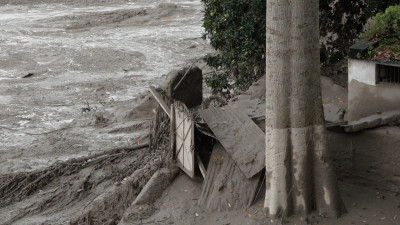
Rasuwa Flood: Death Toll Reaches 1,451, Over 5,705 Still Missing
September 23, 2026
6 Members Appointed to B.P. Koirala Memorial Cancer Hospital
September 22, 2026
Rasuwa Flood: Death Toll Reaches 1,451, Over 5,705 Still Missing
September 23, 2026
Breaking Tradition, Prime Minister Shah Skips Ceremonial Farewells
September 22, 2026