
Mind & Body: A New Scientific Way to Enlighten Through Noise-Mind Control

-1762666201.jpeg)
Saroj K. Joshi, PE, PhD
The mind is dynamic, multidirectional, multidimensional, and influenced by different conscious and subconscious states. We can also relate mind to quantum philosophically only right now. We could use the analogy that the mind is a larger-scale reflection of quantum-like possibility: just as quantum reality can be described in terms of multiple possible outcomes before an outcome is realized, the mind holds many possible versions of reality before we choose, perceive, and act.
Identifying with a future self can therefore be viewed as mentally “selecting” a possibility and organizing your present behavior around it. This is a philosophical analogy, not a claim that the brain literally operates like a quantum system or that consciousness physically collapses reality
Dr. Saroj Joshi’s five principles on “Noise–Mind Control” offer a scientific, engineering lens to understand the behavior of the mind—profound analysis with profound wisdom. Dr. Pooja Amatya Then Sifu/Professor Mihail Pazuk provided valuable suggestions, Er. Yam Bhandari, Er. Andrew Litvinov also commented positively plus many others calling it an interesting article.
Mind & Body Noise-Mind Control:
We find people talking about mind and body a lot. It is a widely discussed subject, not today, not yesterday, but since the very first civilizations. Over thousands of years, the subject has evolved and been interpreted in many different ways, reflecting different cultures, religions, philosophies, and human experiences.
Eastern, Greek, and German philosophers each made profound contributions to understanding the mind–body relationship, consciousness, behavior, and self-awareness. Laozi emphasized harmony and simplicity, Confucius self-cultivation and discipline, and Nagarjuna the interdependent nature of the mind.
Socrates focused on self-knowledge, Plato on the harmony of reason and desire, and Aristotle on the development of the mind through experience and reason. Kant explored how the mind shapes experience, Hegel the development of consciousness and self-awareness, and Schopenhauer the influence of will, desire, and perception. Together, these thinkers represent centuries of effort to understand the complexity of the human mind.
Building on this long philosophical search, Dr. Saroj Joshi has proposed a Noise-Control technique based on five principles, presenting a new methodological approach to studying the mind and its behavior.
The technique aims to provide a practical framework for understanding how the mind functions, identifying and controlling disruptive mental processes, and developing greater awareness and control of behavior. In this sense, the five-principle Noise-Control methodology can be presented as an outstanding tool for advancing the practical study of the mind and its behavioral control.
In more recent times, we have seen widespread interest in Yoga, Pranayama, chakra theory, Tai Chi, Qigong, moving meditation, and other mind body practices. Japanese practices such as Sanchin and Saipa have also become popular, particularly among martial artists.
Through my own study and practice of these and other breathing, movement, meditation, and mind body systems, I developed Bodhilu 1, Bodhilu 2, and Bodhilu 3 as part of Kungchido, a new martial arts system founded by me.
Their development was influenced by my extensive study, observation, and practice of multiple mind body and breathing systems, including Yoga, Pranayama, Tai Chi, Qigong, Sanchin, Saipa, meditation, and other related practices. Through this study and practice, I developed Bodhilu 1, 2, and 3 as integrated components of Kungchido, combining breathing, movement, concentration, and mind body awareness.
After learning and practicing all of these techniques, I still felt that something was missing. Then, on August 15, 2026, an idea unexpectedly came together for me. During my PhD work in the 1980s, I studied the concept of noise processes in electrical engineering. Suddenly, that earlier experience connected with my thinking about the human mind. I began to see the concept of a noise process as a potentially useful and scientific way of looking at the mind and body.
In electrical engineering, a noise process cannot generally be determined precisely at every moment. We may not know exactly what value will occur next, but we can often detect patterns and distributions in the process. Consider a city with five million people in the evening.
No one can determine precisely when each person will turn on a range, oven, light switch, air conditioner, coffee maker, television, or another electrical device. It is impossible to obtain exact information about every individual event. However, we can recognize patterns.
Perhaps most activity occurs between 6 PM and 9 PM, lighting continues between 10 PM and 11 PM, and a smaller percentage of people continue cooking, making coffee, or using other appliances later at night. Someone may even wake up at 2 AM and make coffee. That individual event may fall outside the expected distribution, but the overall process can still have recognizable patterns.
In a typical daily noise process, most events tend to cluster around a common pattern or range, while fewer events occur outside that range. This can be represented conceptually by a normal distribution, where the central region represents the most frequently occurring pattern and the tails represent less frequent events.
In human activity, for example, most people may follow relatively predictable daily routines, while a smaller number may act at unusual times. The purpose is not to predict every individual event precisely, but to recognize the overall pattern of the process.
See Sketch at the end of this article to understand noise process more clearly.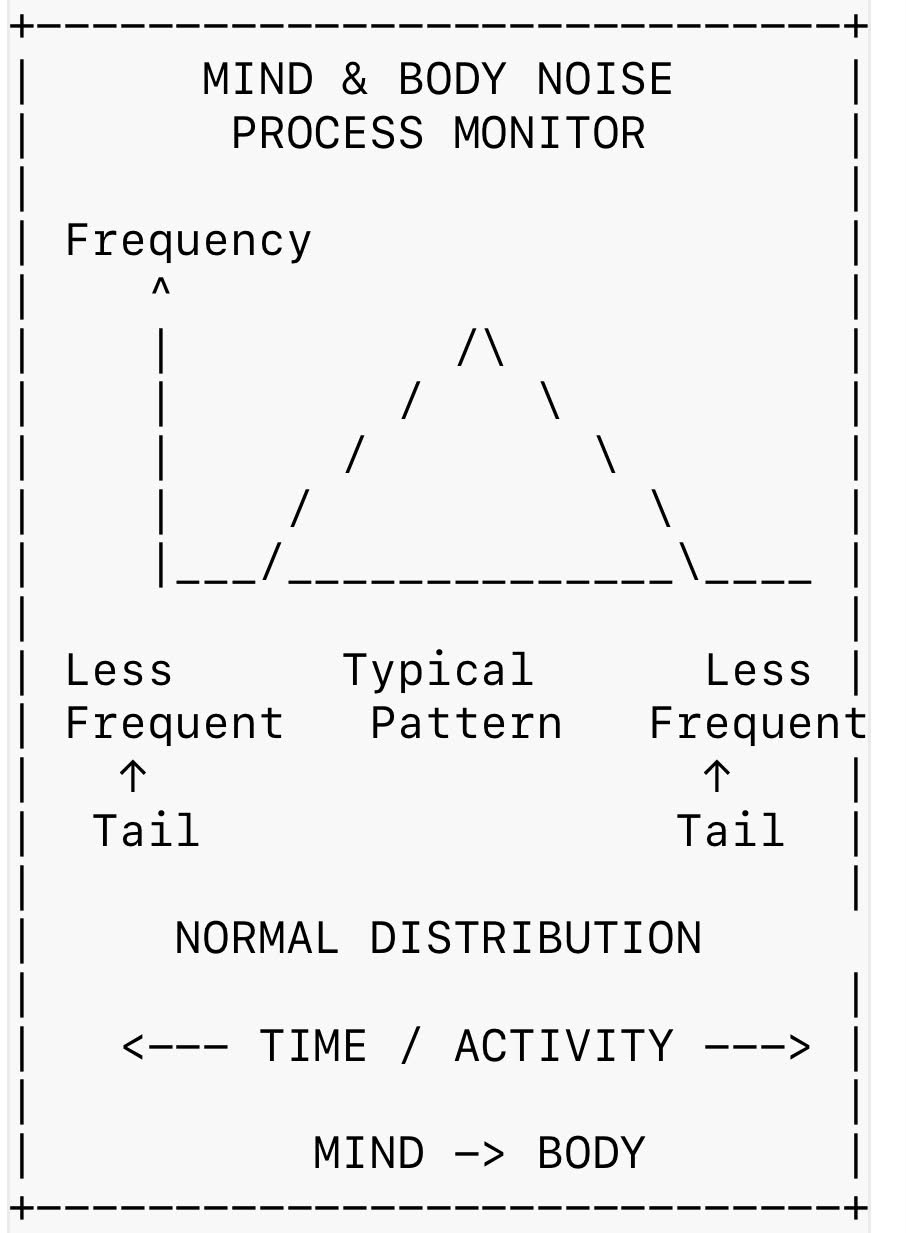






Siddhartha Riverside Resort Scores a Hattrick at SATA Awards
October 16, 2026
Suman Rai Releases ‘Ae Desh’, a Message of Hope and Homeland
October 16, 2026


BP Highway Reopens After Debris Cleared
October 10, 2026