Rice Production Decline Limits Agricultural Sector Growth to 1.58 Percent

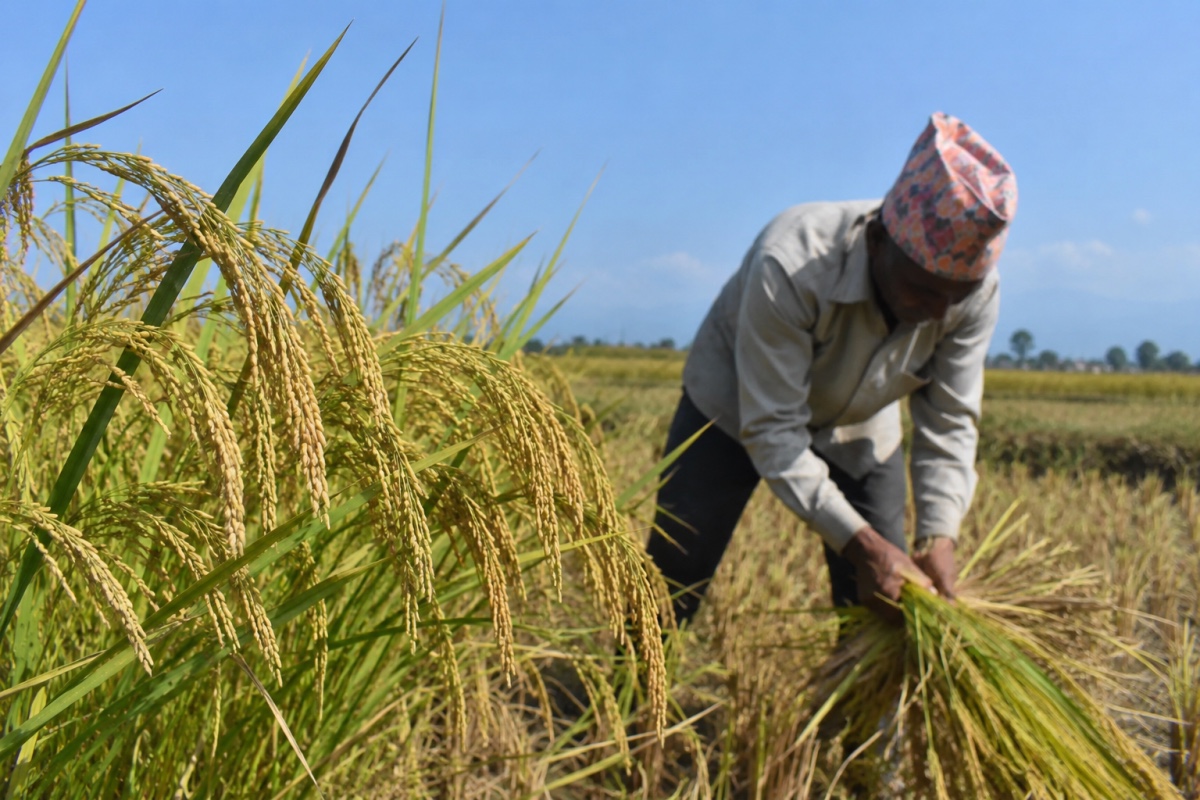
The agricultural sector, which makes the largest contribution to Nepal's economy, has shown a slowdown in the third quarter of the current fiscal year 2025/26 (2082/83 BS). According to the quarterly national accounts statistics released by the National Statistics Office, the growth rate of the agriculture, forestry, and fishery sector has been limited to 1.58 percent.
The office stated that the decline in rice production weakened the overall growth of the agricultural sector. According to the office, although rice crop production decreased, a modest increase in livestock, vegetables, fruits, and forest products helped keep the agricultural sector in a positive state. The report notes that the contributions of these sub-sectors saved the agricultural sector from turning negative.
Although the country's overall economic growth rate was initially projected to be 3.51 percent in the third quarter, the weak expansion of the agricultural sector prevented the economy from gaining its expected momentum. The statistics office stated that the overall economic growth remained moderate due to a decrease in the import of construction materials, a decline in rice production, and a drop in the domestic production of certain goods.
During this period, positive growth was observed in 16 out of 18 industrial classifications of the economy. The electricity and gas sector expanded at the fastest pace with a growth of 24.88 percent, while the financial and insurance sector grew by 10.27 percent, transportation and storage by 7.83 percent, and wholesale and retail trade by 5.25 percent. However, because the agricultural sector—which holds the largest economic share—saw low growth, its direct impact on the overall economy is clearly visible.
According to economists, since the agricultural sector's contribution still remains the highest in Nepal's economic structure, even minor fluctuations in this sector have a significant impact on overall economic growth. The third-quarter data indicates that while improvements were seen in energy, financial services, and the trade sector, the stability of agricultural production still remains a challenge.







Iran Claims to Have Doubled Weapon Production
August 23, 2026-1762666201.jpeg)




Man Arrested for Character Assassination of a Minor
August 22, 2026