Saving Nepal from Its Current Deadlock Crisis: A Call for Sovereignty, Unity, and Reform

-1762666201.jpeg)
A Strategic Blueprint for National Renewal and Sovereignty
By Saroj Joshi PE., Ph.D
Nepal today stands at one of the most critical junctures in its modern history. The nation faces a deep political deadlock, economic uncertainty, and widespread public disillusionment with its institutions. Years of corruption, weak governance, and unchecked foreign influence have eroded national confidence and created a fragile environment that demands immediate, united, and strategic action.
Restoring Order and Stability
To rescue the country from this crisis, Nepal must implement an emergency plan centered on financial discipline, institutional restoration, security, and social stability.
An interim government - supported by the Nepali Army and security agencies - should act decisively to maintain peace, protect national infrastructure, and ensure the continuity of essential public services. Stability in these sectors is not merely administrative; it forms the foundation of the nation’s recovery.
The Nepali people have endured immense hardship, yet history has shown their resilience. When united under a common purpose, they have overcome greater trials. This is a defining moment - one that requires unity over division, principle over politics, and patriotism over personal gain.
Understanding the Deeper Crisis
Nepal’s current predicament is not the result of temporary political turbulence; it is the outcome of decades of gradual erosion in sovereignty and self-reliance. Over the years, foreign influence - often under the guise of INGO, NGOs, grants, and “development programs” - has penetrated Nepal’s economic, political, and even security systems.
While many international efforts have provided valuable support, others have created a pattern of dependency and quiet manipulation, undermining Nepal’s ability to act independently.
This phenomenon echoes the mid-20th-century struggles of smaller nations caught between global powers. In today’s world, the contest is no longer ideological but economic - driven by geopolitical competition and corporate capitalism.
Nepal’s strategic location between two major powers has made it a critical space in this global rivalry, leaving it vulnerable to external pressures that shape domestic policy and governance.
Compounding these external factors, internal failures have worsened the crisis. Political opportunism, corruption, and the prioritization of short-term personal gain over national welfare have left citizens frustrated and disillusioned.
Meanwhile, Nepal’s committed intellectuals, patriots, and reform-minded leaders remain scattered - aware of the dangers but lacking a unified platform to act effectively.
Regional Shifts and Geopolitical Challenges
The geopolitical balance in South Asia has shifted significantly. India’s participation in the QUAD alliance - alongside the United States, Japan, and Australia - has altered the regional equilibrium.
By moving away from its historical non-alignment policy, India inadvertently opened new avenues for Western and corporate influence across the subcontinent.
Due to strategic mistake Joining QUAD, India has recognized her limitations of its QUAD engagement and is exploring closer collaboration with the Shanghai Cooperation Organization while normalizing relations with China.
This shift has indirectly affected Nepal, increasing its exposure to foreign economic leverage and diplomatic pressure. For a small nation, maintaining balance between powerful neighbors is vital. Losing this equilibrium risks not only economic autonomy but also the country’s political independence and long-term stability.
Reclaiming Nepal’s Future
The path forward must begin with clarity - identifying who truly serves the national interest and who serves external or personal agendas. Those who have compromised Nepal’s sovereignty should be lawfully and transparently removed from positions of power.
Rebuilding Nepal requires an inclusive and strategic alliance among every sector devoted to national integrity and progress:
- Patriotic intellectuals and think tanks to shape long-term national strategies
- Military and security institutions to safeguard sovereignty and order
- Entrepreneurs and professionals to rebuild a resilient economy
- Farmers and workers to secure the foundation of national production
- The Non-Resident Nepali (NRN) community to contribute knowledge, investment, and global advocacy
Together, these groups can establish a new governance framework rooted in transparency, accountability, and merit-based leadership. Such unity would not only restore confidence in government but also rekindle the collective spirit of self-reliance that defines Nepal’s identity.
A Vision for a New Nepal
Nepal’s long-term vision must be to rise as a peaceful, prosperous, and non-aligned nation - a country that safeguards its sovereignty while engaging constructively with the world.
The foundation of this new Nepal should rest on three uncompromising principles:
- Zero Corruption
- Zero Collusion
- Zero Emissions.
This is more than a political slogan; it is a moral contract between the state and its citizens. It demands sacrifice, unity, and integrity from every generation. Reform must not be driven by ideology or foreign models, but by the shared national values of honesty, justice, and compassion.
Nepal has the resources, intellect, and resilience to transform itself. What is required now is belief - belief in the nation’s inherent strength and the people’s capacity to shape their own destiny. The youth, especially the Gen-Z generation, must be empowered intellectually and morally to lead this renewal with vision and patriotism.
The Destiny of Nepal
Nepal’s destiny lies in the courage of its citizens, the discipline of its institutions, and the unity of its people. If leaders and citizens alike act with clarity of purpose and patriotic resolve, Nepal can rise above its present paralysis and begin a new chapter of stability, dignity, and hope.
The call for reform is not about division or retribution; it is about renewal, honesty, and courage. A generation that dares to dream of a sovereign, fair, and sustainable Nepal must now act with wisdom and determination.
Nepal’s future will not be written by foreign powers or corrupt elites - it will be defined by the courage, integrity, and unity of its people.
The time for patriotic unity and decisive reform is now.
Author Bio:
Saroj Joshi is an engineer, writer, and social thinker focusing on national development, ethics, and governance reform in Nepal.
-1762666201.jpeg)


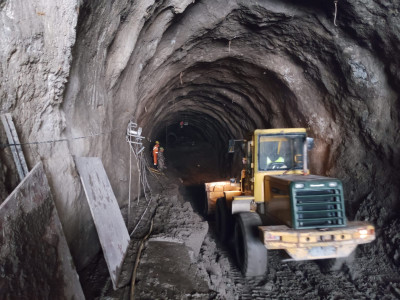
Overnight Rescue Operations Underway at Chilime Tunnel
September 14, 2026
Nepal Esports League Added to Calendar
September 14, 2026
National Children's Rights Day Being Celebrated
September 14, 2026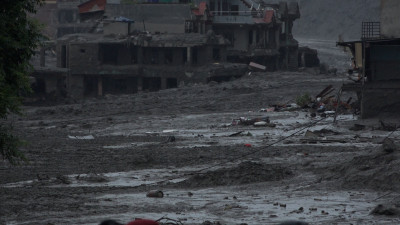
Bhotekoshi Flood: 1,386 Bodies Recovered
September 13, 2026
Overnight Rescue Operations Underway at Chilime Tunnel
September 14, 2026
National Children's Rights Day Being Celebrated
September 14, 2026
Bhotekoshi Flood: 1,386 Bodies Recovered
September 13, 2026