Kungchido Establishes the World’s First Living Connection to the Last Remaining Evidence of Ancient Martial Arts

-1762666201.jpeg)
By Dr. Saroj K. Joshi
Contact: [email protected]
New history is made in Martial Arts in connections with Ancient Martial Arts:
Sifu Saroj Joshi made history by performing Kungchido Sandan on-site in direct reference to the martial depictions preserved on the walls of the Tomb of Khety (c. 2055–1956 BCE, Middle Kingdom, Egypt). These wall paintings represent the world’s oldest and only remaining recorded visual evidence of ancient martial arts, dating back approximately 4,500 years.
On 01 January 2026, this historic performance became the first documented instance in which a modern martial arts system—Kungchido, invented by Sifu Saroj Joshi in 1998—was intentionally practiced in direct connection with these ancient depictions.
Through this act, Sifu Saroj Joshi established a living link between humanity’s earliest known martial traditions and a contemporary martial system, thereby preserving historical continuity and cultural significance for future generations.
Unique photographs and visual comparisons clearly demonstrate the spiritual connection between Ancient Martial Arts & Kungchido Martial Arts plus others.
Here is the link of Kungchido Sandan's demo as stated above : https://youtube.com/shorts/bSsniw57rXY?si=QTiulpTo0s9X6HSd
This article presents a global historical framework connecting the earliest known martial arts traditions of ancient Egypt with modern Buddhist-influenced martial arts originating from Nepal.
Through on-site research at the Beni Hasan Tombs in Egypt and the practice of Kungchido katas, a living connection is established between ancient martial depictions and a contemporary martial system.
The study introduces two original concepts—the Ancient Extended Star and the Modern Martial Arts Triangle—highlighting cultural transmission, spiritual continuity, and global socio-economic potential.
Martial arts have long served as more than systems of combat; they are expressions of philosophy, meditation, discipline, and cultural exchange. After more than two decades of research, travel, and practice, Dr. Saroj K. Joshi documents a historical continuity linking ancient and modern martial traditions.
The Ancient Extended Star
The Ancient Extended Star illustrates the geographic and cultural transmission of martial knowledge among four major centers:
- Cairo, Egypt
- Athens, Greece
- Pataliputra, India
- Chang’an, China
This alignment highlights Egypt’s foundational role and the subsequent spread of martial traditions across Africa, Europe, and Asia.
Modern Martial Arts Lineage
Lumbini, Nepal: The Spiritual Origin
Modern martial arts philosophy traces its roots to Lumbini, Nepal, the birthplace of Siddhartha Gautama (Buddha, c. 563–483 BCE). Early Buddhism emphasized mental discipline, ethical conduct, meditation, and physical control.
Chinese historical sources later associated Buddhist training with physical conditioning practices that evolved into the “18 Iron Hands” exercises at the Shaolin Temple.
Bodhidharma and Shaolin
The monk Bodhidharma (5th–6th century CE) transmitted Buddhist teachings to China, where Shaolin monks systematized meditation, discipline, and physical training. These principles are preserved in texts such as the Yijin Jing (5th–7th century CE), linking Shaolin martial arts to Buddhist spiritual practice.
The Modern Martial Arts Triangle
The Modern Martial Arts Triangle is formed by:
- Lumbini, Nepal
- Kanchipuram, India
- Hunan, China
This triangle represents the philosophical, spiritual, and technical foundation of modern martial arts systems practiced worldwide today.
Kungchido: A Living Synthesis
Kungchido integrates:
- Ancient Egyptian martial principles
- Buddhist meditation and ethics
- Shaolin physical conditioning
Modern martial application
By codifying both the Ancient Extended Star and the Modern Martial Arts Triangle, Kungchido preserves a continuous global martial lineage for future generations.
Cultural and Economic Impact
The recognition of these global martial frameworks offers significant benefits:
- Development of martial arts and spiritual tourism
- Revitalization of historic and monastic sites
- Job creation and global economic opportunities
- Promotion of peace, unity, and intercultural understanding
Martial arts thus emerge as a powerful bridge between cultures, histories, and nations.
Summary:
This research presents the first unified global chronology of martial arts, connecting ancient Egyptian wrestling traditions with modern Buddhist-inspired systems originating from Nepal.
Through Kungchido, this lineage is preserved as both a cultural heritage and a living practice, ensuring continued relevance in education, tourism, and global cultural exchange.
The author expresses deep gratitude to all for the generous support and of the research & Kungchido promotion trip to the Beni Hasan Cemetery, Egypt.
This visit enabled direct study of the martial arts paintings located on the walls of the Tomb of Khety, dating to approximately 2055–1956 BCE during Egypt’s Middle Kingdom period. Her support was instrumental in making this historic documentation possible
- Joshi, S. K., Kungchido, Volumes 1 & 2, 2004
- Beni Hasan Tomb Paintings, Egypt
- Shaolin Monastic Records and Yijin Jing
- Historical texts on Malla-yuddha, Pankration, and Ramayana combat traditions
- “Huge Potential of Tourism & Employment in Martial Arts Triangle (LKS),”

-1762666201.jpeg)
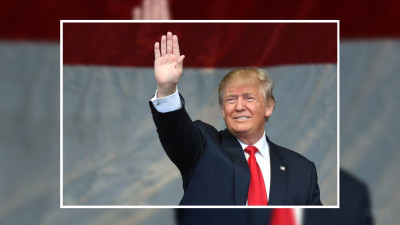
IMEC Necessary to Remove Energy Dependence on Iranian Chokepoints: Trump
September 23, 2026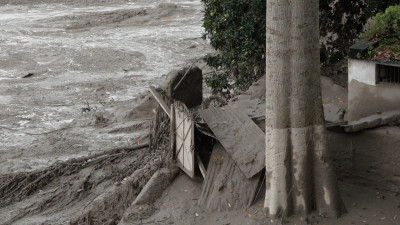
Rasuwa Flood: Death Toll Reaches 1,451, Over 5,705 Still Missing
September 23, 2026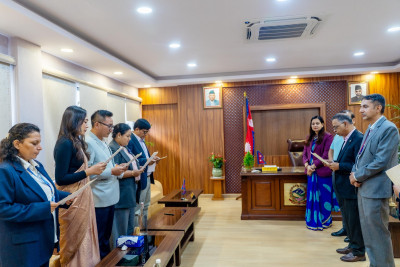
6 Members Appointed to B.P. Koirala Memorial Cancer Hospital
September 22, 2026
Rasuwa Flood: Death Toll Reaches 1,451, Over 5,705 Still Missing
September 23, 2026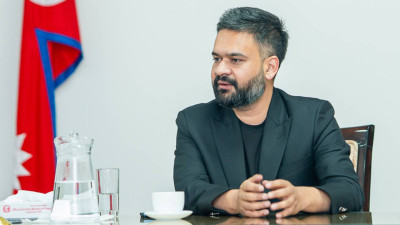
Breaking Tradition, Prime Minister Shah Skips Ceremonial Farewells
September 22, 2026