Second GKS Alumni Nepal Symposium 2025

-1768120782.jpg)
GKS Alumni Nepal, an alumni association of Nepali awardees of the Global Korea Scholarship (GKS) who graduated from universities in the Republic of Korea, successfully organized a symposium on December 6, 2025 at the Office of the Dean, Faculty of Education, Tribhuvan University, Balkhu, Kathmandu.
The GKS is a prestigious government scholarship provided by the Republic of Korea to aspiring Nepali students for undergraduate and graduate studies for more than two decades. A large number of Nepali students have benefited from this scholarship, and many alumni have returned to Nepal and formed an association called GKS Alumni Nepal.
The association aims to bring Nepali GKS graduates together to work collaboratively in academic, research, and professional development activities, while also providing a strong platform for networking and playing an important role in strengthening the bond between Nepal and Korea.
This was the second symposium organized by GKS Alumni Nepal, held under the theme “Bridging Disciplines with AI: From Medical Breakthroughs to Engineering Excellence.” The symposium was supported by the National Institute for International Education (NIIED) and the Embassy of the Republic of Korea in Kathmandu, Nepal.
The objective of the symposium was to bring together experts and professionals who are working, teaching, and conducting research in artificial intelligence (AI) and related fields, as well as aspiring students seeking guidance, support, and motivation. The event aimed to support participants in their academic journey and career development.
The program was chaired by Dr. Ramakanta Lamichhane, President of GKS Alumni Nepal and Assistant Professor in the Department of Pharmacy, School of Science, Kathmandu University. The Chief Guest of the program was Dr. Bed Raj Acharya, Dean of the Faculty of Education, Tribhuvan University, and the Special Guest was Ms. Lee Woo Jin, Second Secretary and Consul of the Embassy of the Republic of Korea in Kathmandu.
The event was anchored by Dr. Indra Raj Upadhyaya, Vice President of GKS Alumni Nepal. During her remarks, Ms. Lee Woo Jin conveyed the best wishes of His Excellency, the Honorable Ambassador of the Republic of Korea to Nepal, Mr. Park Taewoong, to the program.
The program began with the Keynote Session delivered by Dr. Sudan Jha, Professor at the Department of Computer Science & Engineering, Kathmandu University, Dhulikhel.
His presentation, titled “The Computational Core: Architecting Robust AI for Cross-Disciplinary Breakthroughs,” highlighted the role of simulation, reinforcement learning, and formal verification in developing safe and reliable AI systems for engineering and medical applications.
This was followed by the First Session, where the first presenter, Mr. Rom Kant Pandey from the ICT Education Department, Tribhuvan University, discussed Prompt Engineering (PE) as an emerging pedagogy. He explained how PE may replace traditional pedagogical content knowledge (PCK) by enabling personalized learning through large language models.
He shared that 86% of students worldwide are already using GenAI tools, benefiting from significant time savings. He encouraged students to learn effective prompt writing using context-rich instructions and emphasized ethical AI use in alignment with university policies while avoiding overdependence.
The second presenter, Dr. Yagya Raj Pandeya, Assistant Professor in the Department of Artificial Intelligence, Kathmandu University, highlighted the evolution of AI and explored global and national challenges, risks, and opportunities. His talk focused on AI applications, with a strong emphasis on risk assessment and the secure, responsible use of AI for practical problem-solving and economic development.
The last presenter of the first session, Mr. Narayan Timalsena, shed light on the National AI Policy guidelines. He explained how governments promote, regulate, and integrate artificial intelligence to support national socio-economic development. He highlighted that the Government of Nepal has recently introduced the National AI Policy, which places academia at the center of the country’s AI ecosystem.
Nepal’s national AI objectives aim to boost the IT sector’s contribution to GDP by one percent through widespread AI adoption, elevate the country into the top fifty of the Global Government AI Readiness Index, and build strong human capital by producing at least five thousand skilled AI professionals within five years.
He emphasized that aligning education with national AI strategies,the graduates will become better prepared for the evolving labor market, more competitive globally, and more capable of contributing to responsible, ethical, and innovative AI adoption. The session was chaired by Mr. Nabaraj Gautam, President of KOICA Alumni Association of Nepal (KAAN) and Chief Administrative Officer, Khumbu Pasanglhamu Rural Municipality, Solukhumbu.
The second session included two speakers Speaker. The first speaker Dr. Subash Pyakurel a Healthcare Analyst and Founder of Health Concern Nepal, elaborated on the role of AI as an emerging medical assistan. He emphasized that along with trending fast pace and wide acceptance of artificial intelligence, health sector can no longer be an exception.
Because the healthcare domain involves multiple stakeholders, diverse regulatory bodies, and a vast and complex ecosystem, it demands accuracy, efficiency, and timely service—making AI a valuable tool.
He mentioned that AI can be a medical assistant having power packed booster effect for overall healthcare effectiveness but cannot replace humans and hospitals, compared with few predicted other sectors, due to lack of empathy, human touch and feeling of care topped by heterogenous and polysemous (multi meaning) model of data in health sector.
The last presenter of the session, Dr. Amit Shrestha, Associate Professor form CIST College, Baneshwor, Nepal explained the application procedure, opportunities and advantages of Global Korea Scholarship. The session was chaired by Dr. Taraman Kadayat, Assistant Professor of Larkin University, USA.
With the participation of 50 attendees and the insightful sessions delivered by distinguished speakers, the program served as an important platform for participants to gain valuable knowledge on AI—its policies in Nepal, its applications across various sectors, its impact on communities, ethical considerations, prompt engineering, and much more.
The program was concluded by the President of GKS Alumni Nepal, Dr. Ramakanta Lamichhane, who delivered his closing remarks and extended a vote of thanks to all the speakers, participants, and supporting organizations. He emphasized the ethical use of AI, highlighting that while AI holds immense potential, it can also pose serious risks to humanity if not guided by strong moral values and ethical considerations.
Dr. Lamichhane also advised the participants—mostly undergraduate and graduate students—to prioritize human safety and societal benefit when using AI, reminding them that they are the future leaders and key stakeholders in the field of artificial intelligence.
The participants represented four different universities: Kathmandu University, Tribhuvan University, Pokhara University, and Madan Bhandari University of Science and Technology.
They came from diverse academic backgrounds, including Pharmacy, Botany, Chemistry, AI, Chemical Engineering, Data Science, Biotechnology, Information Management, Education, and Public Health.
-1768120783.jpg)
-1768120783.jpg)
-1768120782.jpg)
-1768120782.jpg)



Overnight Rescue Operations Underway at Chilime Tunnel
September 14, 2026
Nepal Esports League Added to Calendar
September 14, 2026
National Children's Rights Day Being Celebrated
September 14, 2026
Bhotekoshi Flood: 1,386 Bodies Recovered
September 13, 2026
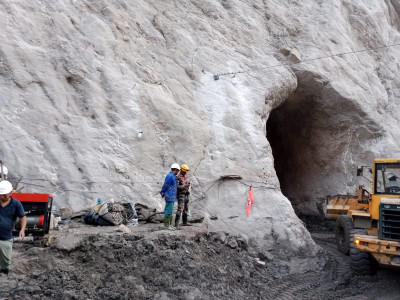
Overnight Rescue Operations Underway at Chilime Tunnel
September 14, 2026
National Children's Rights Day Being Celebrated
September 14, 2026
Bhotekoshi Flood: 1,386 Bodies Recovered
September 13, 2026