Balen Shah’s Strategic Maneuver: President Paudel Compelled to Authenticate Ordinance

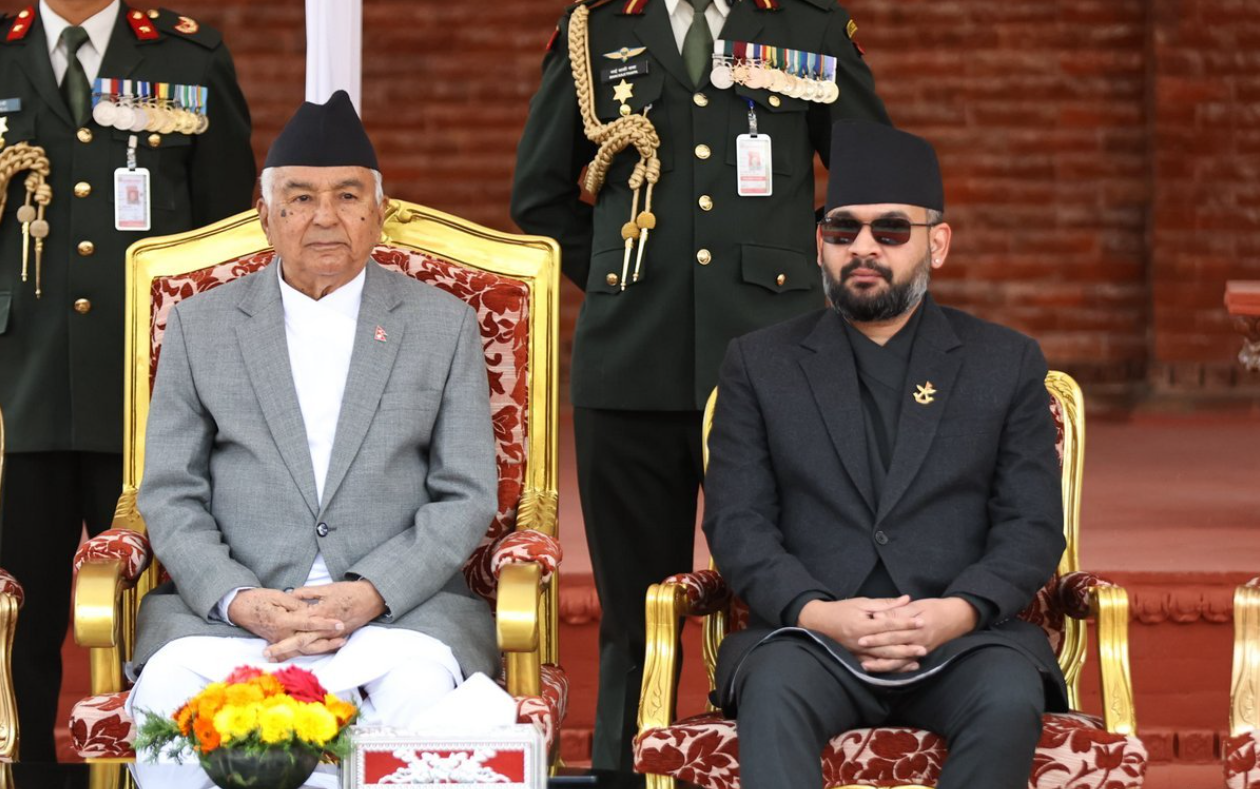
Prime Minister Balen Shah, emerging as a cunning player in Nepali politics, has ultimately forced President Ramchandra Paudel to relitigate his stance. While President Paudel remained firm against former heads of government like KP Oli and Sushila Karki, he found himself helpless before Prime Minister Balen this time, eventually being compelled to issue the Ordinance Related to the Constitutional Council.
Only this past Sunday, President Paudel had returned the ordinance to the government for reconsideration, stating it went against the spirit of the constitution and the law. However, after a cabinet meeting held on Monday decided to recommend the same ordinance for issuance once again, the President was forced to authenticate it on Tuesday. The President had primarily raised serious questions regarding the decision-making process and the quorum mentioned in the ordinance.
While democratic and legal norms dictate that a majority of at least four members in the six-member Constitutional Council (including the Chairman) must reach a decision, the ordinance introduced a flexible provision allowing only three members, including the Prime Minister, to make decisions.
Similarly, the ordinance stipulated that a quorum of only four members would be sufficient to hold a meeting. The President had expressed dissatisfaction, arguing that provisions allowing a minority to make vital appointments to constitutional bodies by dismantling the fundamental principle of majority were not in accordance with the spirit of the constitution.
This week remained highly stressful for President Paudel, who has been trying to build an image as a protector and guardian of the constitution. Observers have begun commenting that this is not merely an incident of an ordinance being issued, but a type of "constitutional assault" by the executive on the institution of the Presidency.
Let’s look at the sequence of events:
On Baisakh 14, the government sent the Ordinance Related to the Constitutional Council to Sheetal Niwas for approval. On Baisakh 20, President Ramchandra Paudel returned it to the government for reconsideration, raising several serious constitutional questions. Many interpreted this move by the President as a "bold" decision. However, Prime Minister Balen Shah had a different strategy.
Instead of respecting the President’s suggestions, he called an emergency cabinet meeting the very next day and decided to re-recommend the exact same ordinance without any amendments or discussion. This decision was akin to an ultimatum given to the President, forcing him to yield by utilizing the provisions of Article 114 of the Constitution.
According to constitutional experts, the President does not possess the constitutional authority to block an ordinance recommended by the Council of Ministers for a second time. The Prime Minister utilized this exact legal loophole to place President Paudel in a position where he either had to resign or affix the royal seal according to the government's will.
Ultimately, on Tuesday, the President issued the same ordinance that he had deemed "flawed" just hours prior. This has made it clear that Balen Shah has proven Sheetal Niwas to be quite weak, not just administratively, but in terms of political and legal maneuvering as well.
The background of this friction is even more interesting. There are past examples of bills passed during the tenure of then-Prime Minister KP Sharma Oli and similar ordinances recommended during the tenure of former Prime Minister Sushila Karki being returned.
However, Balen Shah succeeded in standing his ground by overturning all those precedents. In this battle between the President's discretion and the government's power, Singha Durbar has won the bet today, while Sheetal Niwas has been reduced to a mere witness.
Finally, the Constitutional Council (Related) Ordinance 2083 has now become law. Whether through trickery or through sheer power, Prime Minister Balen Shah has severely bruised the President's ego. Now the question arises: is the institution of the President merely a body to rubber-stamp the government’s decisions? Or where will this "fast-track" politics shown by Balen Shah lead constitutional balance in the coming days? Only time will tell.

Overnight Rescue Operations Underway at Chilime Tunnel
September 14, 2026
Nepal Esports League Added to Calendar
September 14, 2026
National Children's Rights Day Being Celebrated
September 14, 2026
Bhotekoshi Flood: 1,386 Bodies Recovered
September 13, 2026
Overnight Rescue Operations Underway at Chilime Tunnel
September 14, 2026
National Children's Rights Day Being Celebrated
September 14, 2026
Bhotekoshi Flood: 1,386 Bodies Recovered
September 13, 2026