Optimization, Modeling, and Tree Decomposition: A Practical Approach to Solving Complex Problems


Saroj K. Joshi, PE., PhD
Throughout my professional journey as an engineer and researcher, I have observed that many challenges across different fields share a common need: the ability to understand complex systems and make better decisions. Whether the problem involves engineering design, technology, business operations, or natural systems, the principles of optimization, modeling, and structured analysis provide valuable tools for finding practical solutions.
Optimization is a powerful concept because it helps us search for the best possible outcome among many choices. In engineering, optimization can help create safer designs, improve efficiency, reduce waste, and make better use of resources. Beyond engineering, optimization supports decision-making in healthcare, transportation, energy, finance, and many other areas. The basic idea remains the same: when resources are limited and goals are important, we need a systematic way to identify the best approach.
Modeling is another essential tool for understanding the world around us. A model allows us to represent a real system in a simpler form so that we can study its behavior and predict possible results. In my view, a good model is not necessarily the most complicated one. It is the one that captures the important characteristics of a system and helps us make meaningful decisions.
As systems become larger and more connected, managing complexity becomes a major challenge. This is where tree decomposition provides a valuable approach. By organizing a complex system into smaller connected parts, tree decomposition helps us analyze problems that may otherwise be difficult to solve. This method has important applications in computer science, artificial intelligence, optimization, and many areas where complex relationships must be understood.
The combination of modeling, optimization, and tree decomposition creates a strong framework for solving modern problems. Modeling helps us understand the system, optimization guides us toward better solutions, and tree decomposition helps us manage complexity. Together, these methods allow us to approach difficult challenges in a more organized and efficient manner.
I believe these approaches are not limited to one discipline. They represent a common language that connects engineering, science, technology, and decision-making. As the challenges facing society become more complex, our ability to analyze systems, improve performance, and develop innovative solutions will become increasingly important.
Optimization, modeling, and tree decomposition are more than technical methods. They are ways of thinking that help us transform complex problems into opportunities for improvement and progress.

-1762666201.jpeg)


Nepal Rastra Bank to Absorb NPR 20 Billion in Deposits
September 24, 2026
Sita Air Plane Wheel Comes Off in Dolpa's Juphal
September 24, 2026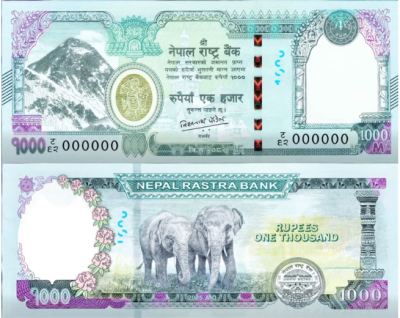
Nepal Rastra Bank to Absorb NPR 20 Billion in Deposits
September 24, 2026
Sita Air Plane Wheel Comes Off in Dolpa's Juphal
September 24, 2026