Sher Bahadur Tamang: UML is a Party of the People, Not Just Google

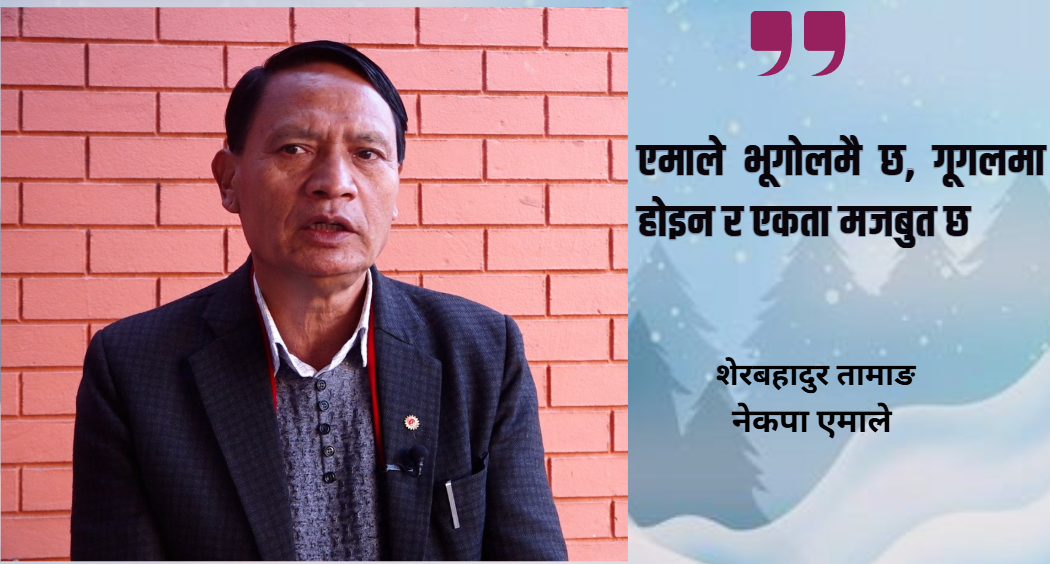
Kathmandu: Sher Bahadur Tamang, a central member of the CPN-UML and the proposed House of Representatives candidate from Sindhupalchok Constituency No. 2, has stated that the party's recent general convention sent a clear message that the UML has become even more powerful, inclusive, and grassroots-based.
He remarked that the convention was held earlier than scheduled because the party felt the need to test itself among the people following the destruction that occurred on Bhadra 23–24. He noted that the decision to proceed with the convention was made only after gauging public opinion through nationwide programs.
Tamang claimed that the massive public participation seen at the convention’s inauguration in Sallaghari, Bhaktapur, debunked the myth that "old parties are finished" and proved that the UML remains strong on the ground. Highlighting the significant gap between social media views and actual public support, he stated that the UML is a party rooted in the "geography," not just in "Google."
He mentioned that the convention institutionalized the representation of the younger generation, calling the mandatory inclusion of the under-40 age group a historic move. According to him, inclusive representation from youth, women, Janajatis, Dalits, Madhesis, Tharus, minorities, and backward regions has been ensured from people's organizations to the Central Committee. He stated that the elected Central Committee has become a model of inclusivity.
Tamang asserted that the convention politically dismissed the multi-pronged attacks against Party Chairman KP Sharma Oli. He said the convention signaled that the Chairman is not just popular but has been re-established as a necessity for both the party and the nation. "The fact that KP Oli is a necessity not just for the UML, but for the entire nation, has been established," he said.
Describing splits in political parties as unfortunate, Tamang noted that history shows the country suffers when major parties break apart. He alleged that the recent split in the Nepali Congress was unusual and a result of external interference. Arguing that the Nepali people did not support the destruction of Bhadra 23–24 and that no one took responsibility for it, he stated that parties born from such events would face reality through the elections.
Claiming that the government was formed unconstitutionally, he reminded that the UML stood in favor of restoring the parliament. However, he noted that once the election process began, the UML participated in technical preparations and is now fully ready for the polls. He clarified that all candidates have been finalized and the UML maintains that the election must take place on March 5 (Falgun 21).
Regarding women's representation, Tamang stated that the 33 percent constitutional requirement would be met through the proportional representation system. Acknowledging that the number of women in direct elections is lower than expected due to social structures, he said that social change does not happen all at once. However, he expressed confidence that society is moving toward reform and that female leadership will continue to expand.
Completely rejecting the notion that the Nepali people are angry, Tamang argued that the public did not spontaneously engage in violence. He stated that the events of Bhadra 23–24 caused economic damage worth 400 to 500 billion rupees and pushed the pace of development back by nearly 20 years.
Nevertheless, he urged people not to be discouraged, as Nepal is rich in natural resources, and emphasized that the country should move forward through harmonious competition rather than the politics of abuse and division.
Overnight Rescue Operations Underway at Chilime Tunnel
September 14, 2026
Nepal Esports League Added to Calendar
September 14, 2026
National Children's Rights Day Being Celebrated
September 14, 2026
Bhotekoshi Flood: 1,386 Bodies Recovered
September 13, 2026
Overnight Rescue Operations Underway at Chilime Tunnel
September 14, 2026
National Children's Rights Day Being Celebrated
September 14, 2026
Bhotekoshi Flood: 1,386 Bodies Recovered
September 13, 2026