Three-Day Capacity Development Training Organized for Water Supply User Committees

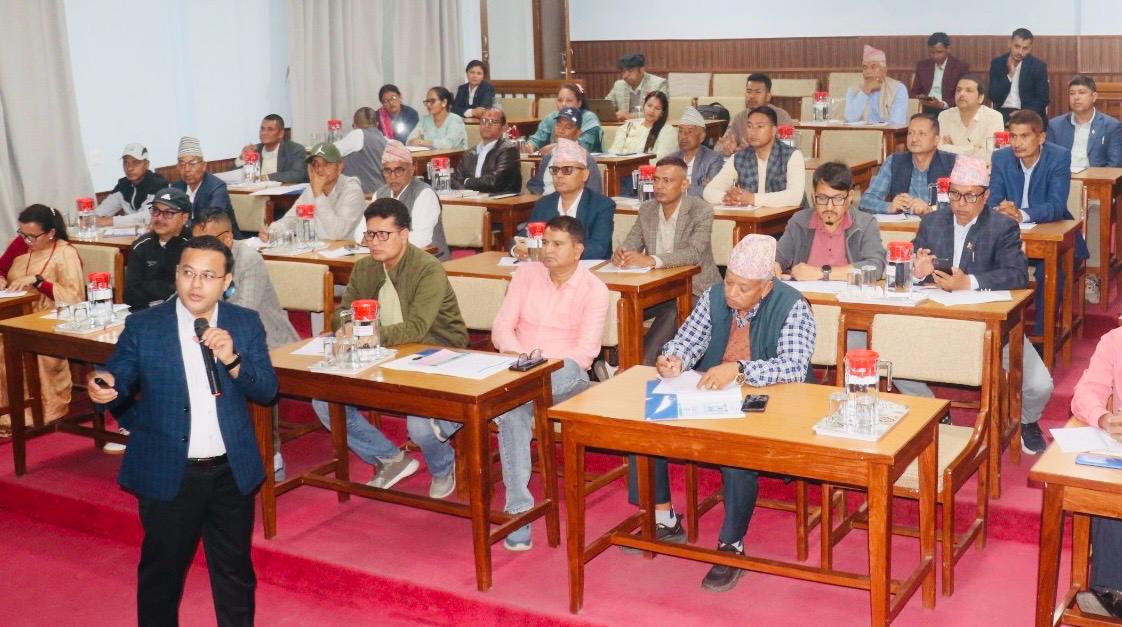
Kathmandu, April 22: A three-day training program has been organized with the objective of developing the capacity of Water Supply User Committees, jointly hosted by the National Water Supply and Sanitation Research, Innovation, and Capacity Development Center under the Ministry of Water Supply and the United Nations Human Settlements Programme (UN-Habitat).
The National Water Supply and Sanitation Research, Innovation, and Capacity Development Center stated that the training, which began on Tuesday, will run until April 23.
Executive Director of the Center, Engineer Ram Kumar Shrestha, informed that 45 representatives from 24 organizations, including Water Supply User Committees and Water Supply Management Boards operating in various parts of the country, are participating in the program.
Executive Director Shrestha said the objective of the program is to make water supply and sanitation management more effective and sustainable by enhancing the institutional capacity of the user committees.
According to him, participants will receive training on leadership development, institutional management, problem-solving methods, financial management, tariff determination processes, service delivery quality improvement, and standards to be followed in procurement processes.
He said, "Water Supply User Committees are extremely important structures at the local level. If their leadership capacity and management efficiency increase, service delivery also becomes effective. Therefore, this training places special emphasis on how leadership should coordinate with their staff, how to interact with service users, and how to make the institution transparent and accountable."
On the first day of the training today, experts from various fields provided instruction. Khem Oli, Chairperson of the National Small Water Supply and Sanitation Federation; Subhash Raj Panta, Water Supply and Sanitation Expert from the Town Development Fund; Water Supply Experts Chok Prasad Dhital and Kamal Adhikari; Yogendra Chitrakar, representative from the Ministry of Water Supply; Surat Bam from the Department of Water Supply; and Executive Director of the training center, Eng. Ram Kumar Shrestha, gave thematic presentations to the participants.
The experts provided detailed information on the technical and administrative processes to be adopted while operating water supply projects, as well as how to strengthen financial discipline, transparency, and community participation.
Engineer Shrestha stated that this is the first time such training has been organized with the aim of empowering Water Supply User Committees located in remote and rural areas of Nepal.
It has been noted that while water supply projects are operating in many locations, service delivery has not been effective due to a lack of management capacity, technical knowledge, and challenges in financial management.
The organizers expect this training to help make water supply service management at the local level more organized, transparent, and sustainable by providing participants with necessary knowledge, skills, and experience.
Furthermore, it is believed that participants will implement the knowledge and experience gained through the training in their respective areas to bring about positive changes in the field of water supply and sanitation.
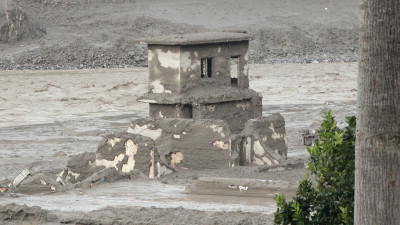

Bhote Koshi Flood Update: 1,409 Bodies Recovered
September 17, 2026
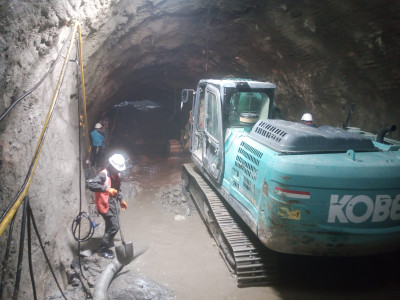
Four Bodies Found Inside Chilime Hydropower Project Powerhouse
September 16, 2026
Bhote Koshi Flood Update: 1,409 Bodies Recovered
September 17, 2026
Four Bodies Found Inside Chilime Hydropower Project Powerhouse
September 16, 2026