
Broad Discussion Among Stakeholders on Collaboration for Research in the WASH Sector

-1763872853.jpg)
Kathmandu: A broad discussion was held among stakeholders on the possible areas of collaboration for conducting studies and research in the Water Supply, Sanitation, and Hygiene (WASH) sector.
This marks the first time a comprehensive discussion has been held with stakeholders regarding studies and research in the water supply and sanitation sector. Previously, while the need for research in the water supply and sanitation sector was highlighted, they had not formally come together for a discussion.
The discussion on conducting studies and research in the WASH sector was organized for the first time by the National Water Supply and Sanitation Research, Innovation and Capacity Building Centre (NWSS-RICBC) under the Ministry of Water Supply, with the support of Welthungerhilfe (WHH).
The participants included representatives from UN agencies, development partners, academic and scholarly institutions, various civil society organizations, networks, and water supply and sanitation experts.
In his welcome speech at the discussion program, WHH WASH Expert Biju Dangol informed the participants that studies are currently being conducted on the status of groundwater levels in the Terai-Madhesh and the condition of spring sources in the hilly regions.
Er. Ram Kumar Shrestha, Executive Director of the Centre, stated that the discussion was organized with the objective of collaborating with development partners to utilize available resources for evidence-based and implementation-oriented research and innovation, and to enhance research capacity, in line with the Centre's expanded scope of work.
He said, "The discussion was organized to talk with development partners, in line with the Centre's expanded mandate, to identify available research areas and financial opportunities, and to identify potential areas for collaboration."
During the discussion, the development partners expressed their views on the areas their respective organizations are currently researching and how research-based cooperation can be established between research bodies in various fields.
Representatives from academic institutions, including Kathmandu University, participating in the program, mentioned that research work on various issues related to water supply and sanitation is ongoing, and that research could be expanded if they could collaborate further with development partners.
The participants in the discussion indicated their readiness to provide financial assistance and stressed the need to identify research topics and call for interested researchers.
At the end of the discussion program, Er. Shrestha, Executive Director of the NWSS-RICBC, stated that this first discussion on possible collaborations for studies and research was very fruitful.
He committed to preparing a document based on the issues raised during the discussion, sharing it with everyone, and then organizing a second-phase discussion program to formulate an action plan.
He added, "Although a budget is allocated for research within the research center, it is very minimal. Collaboration between the government and development partners will help give concrete shape to the research."
The discussion was attended by representatives from the Ministry of Water Supply, Department of Water Supply and Sewerage Management, academic institutions (Kathmandu University, Pulchowk Engineering College, and Thapathali Campus professors), UN agencies (UN-Habitat, WHO, UNICEF), development partners (WaterAid, SNV, Welthungerhilfe, Embassy of Finland, JICA, ICIMOD, IWMI, ENPHO, Oxfam, British Embassy), capacity building institutions (Technical Training Institute Bhaktapur, Local Development Training Academy Jawalakhel, Nepal Administrative Staff College Jawalakhel), network organizations (Citywide Inclusive Sanitation Alliance, Municipal Association of Nepal, National Association of Rural Municipalities in Nepal, Federation of Water and Sanitation Users Nepal - FEDWASUN, and Federation of Small Town Water Supply and Sanitation Users Nepal), and water supply and sanitation experts.
-1763872853.jpg)
-1763872855.jpg)
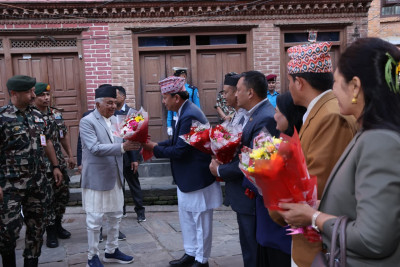
President Paudel Performs Puja and Worships Nava Durga Bhawani
October 25, 2026
Kojagrat Purnima is being celebrated nationwide today
October 25, 2026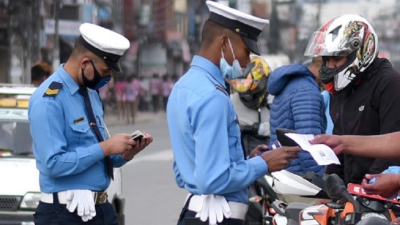
Traffic Police Penalize 336 Drivers in 24 Hours
October 24, 2026
BP Highway Reopens After Debris Cleared
October 10, 2026