
Swami Anand Arun Proposes Seven-Point Vision for Nepal's National Interest

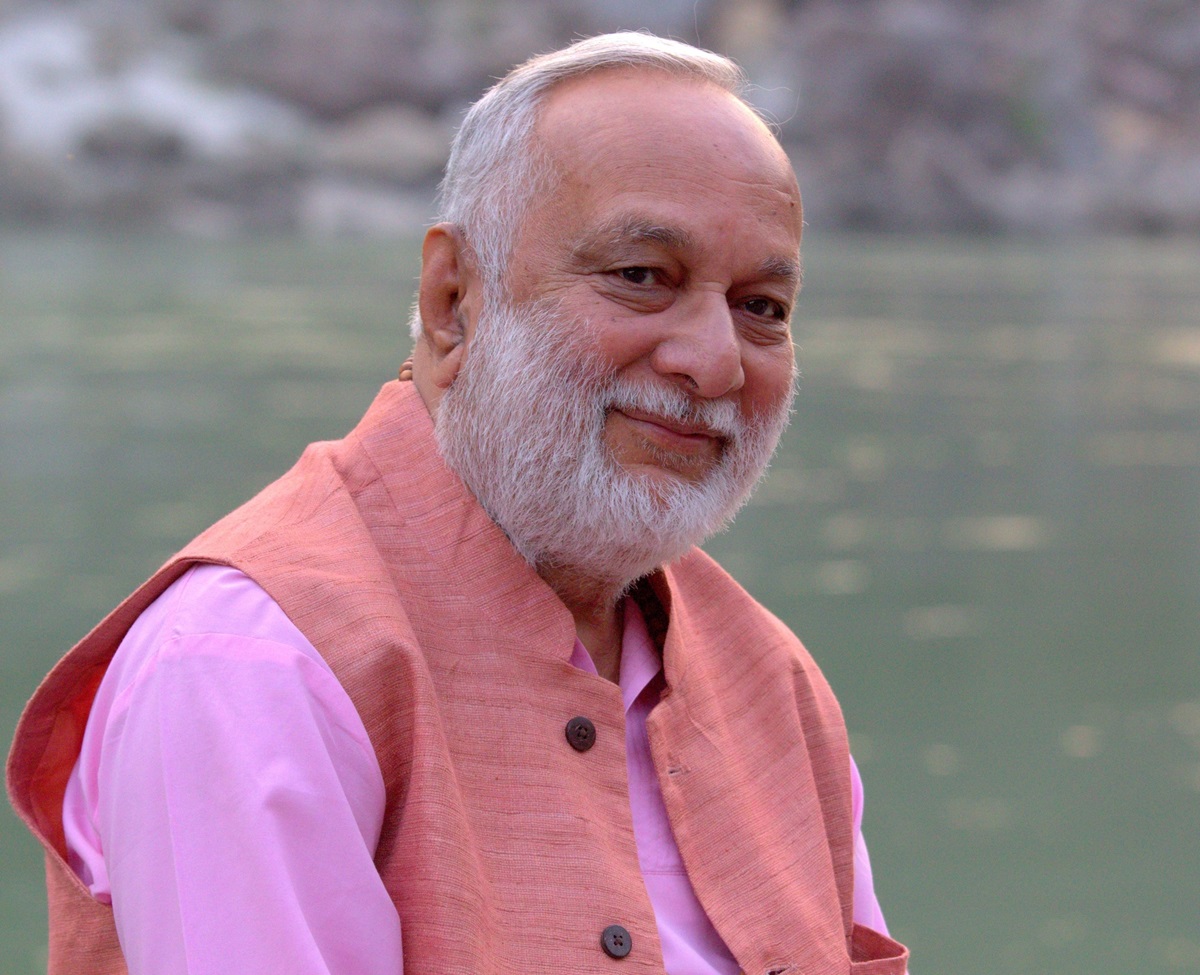
KATHMANDU. Bodhisattva Swami Anand Arun, the founder of Osho Tapoban and a spiritual leader, has urged all political parties in Nepal to adopt a shared policy centered on long-term national interest.
Inspired by the concept of the European Union, he proposed that Nepal should take the lead in forming an Asian Union, suggesting that Nepal could potentially serve as its capital.
In a seven-point proposal aimed at the election manifestos of various parties and the agenda of the upcoming government, Swami Arun presented far-reaching agendas related to Nepal’s civilizational identity, economic potential, social justice, energy diplomacy, health systems, tourism, and regional peace.
Nepal is currently passing through a decisive transition period. The increasing activity of the younger generation, questions raised against traditional political structures, the emergence of new political forces, and the possibility of forming a government through cooperation are leading the country in a new direction. "This is not just a time for a change in power, but an artistic opportunity to redefine the state's thinking, priorities, and long-term vision," Swami Arun’s proposal mentions.
Separate Ministry for Yoga, Meditation, and Alternative Health Describing Nepal as a historical center for yoga, meditation, Ayurveda, and alternative health systems, Swami Arun proposed forming a separate ministry to cover this sector. Given the global rise in mental stress, lifestyle diseases, and healthcare costs, he argued that these knowledge systems are preventive, cost-effective, and impactful for overall health.
He stated that traditional treatment methods such as Yoga, Meditation, Ayurveda, Homeopathy, Unani, Naturopathy, Tibetan medicine, Acupuncture, Acupressure, traditional healing, and Tantra-Mantra should be integrated with research, practice, public health services, and health tourism. Citing the example of India’s ‘Ministry of AYUSH,’ he mentioned that a similar structure is necessary in Nepal.
Monkey Menace as a National Crisis The second point of the proposal urges that monkey control and a policy for human-wildlife coexistence be kept as a national priority. According to Swami Arun, the monkey menace is no longer just a wildlife issue but a serious crisis linked to agriculture, housing, public safety, and the rural economy.
Quoting available data, he stated that about 25 percent of land in Nepal has become barren due to monkeys and about 60 percent of farmers in mid-hill districts have suffered serious crop losses. He also drew attention to monkey attacks on humans, the risk of rabies, and the negative impact on tourism.
Stating that the current monkey sterilization policy is ineffective, he proposed studying measures adopted in Sri Lanka and some Indian states to find scientific and long-term solutions, even suggesting the option of reopening controlled exports if necessary.
Demand for Tax Reforms in Donations and Social Security Explaining religious and spiritual institutions as social service organizations that assist the state rather than replace it, Swami Arun demanded a review of the tax system on donation amounts. He stated that charging 15 percent tax on interest earned from donations collected for public welfare and kept in banks is contrary to the core spirit of donation.
He proposed that donation amounts should be legally recognized as social service funds rather than income, taxes on interest for religious and spiritual institutions should be abolished, and interest income for citizens over 65, people with disabilities, and widows/single women should not be taxed.
New Thinking in Tourism and Permanent Residency Stating that Nepal is globally attractive as a natural, cultural, and spiritual destination, Swami Arun suggested making a clear policy regarding granting Permanent Residency (PR) to foreign investors.
He noted that while the number of foreigners wishing to reside in Nepal with investments in development, tourism, and infrastructure is increasing, opportunities are being wasted due to policy ambiguity. He believes that implementing such a policy with proper standards and security can bring in capital, create jobs, promote tourism, and strengthen the local economy.
Vision to Make Nepal a Regional Energy Hub Swami Arun considers the energy sector a major power linked to Nepal's future. He claimed that while the fact of 84,000 MW hydropower potential was made public about 50 years ago, today, with the development of technology and the addition of solar and wind energy, the potential exceeds 200,000 MW.
The proposal mentions that Nepal can become a regional energy hub if it adopts an export strategy while ensuring internal consumption, keeping in view the increasing energy demand of neighboring countries like India, China, and Bangladesh. He argued that this would strengthen national income, trade balance, and diplomatic status.
Proposal to Declare Ashtavakra Mahagita as a National Book Regarding cultural identity, Swami Arun proposed declaring the Ashtavakra Mahagita as Nepal's national book. He stated that this text, based on the enlightened dialogue between Sage Ashtavakra and King Janak in the Mithila region, is an original philosophical heritage born on Nepali soil.
Citing examples of other countries making their civilizational texts national symbols, he suggested using the Ashtavakra Mahagita for taking oaths, giving it as a gift to foreign guests, and making it a medium of cultural diplomacy.
Nepal's Initiative in Forming an Asian Union In the final point of the proposal, Swami Arun presented his most ambitious concept—the formation of an Asian Union (AU). Giving the example of how peace and economic integration increased in Europe after the formation of the European Union (EU), he argued that such a union is necessary in Asia based on shared civilization and cultural foundations.
Noting that while many Asian countries are poor, a large portion of resources is spent on military preparation and the nuclear risk is high, he stated that the initiative could start from a country with Hindu-Buddhist cultural plurality. He claimed that if Nepal, which has good relations with all Asian countries, moves this proposal forward, there is a possibility that the union's capital would remain in Nepal.
Swami Anand Arun clarified that all these proposals are not against any party, ideology, or class, but for the long-term social, economic, cultural, and humanitarian interest of Nepal. He called upon all political parties to include these suggestions in their election manifestos if they find them appropriate, make public commitments, and move forward with the implementation process after the formation of the government.

President Paudel Performs Puja and Worships Nava Durga Bhawani
October 25, 2026
Kojagrat Purnima is being celebrated nationwide today
October 25, 2026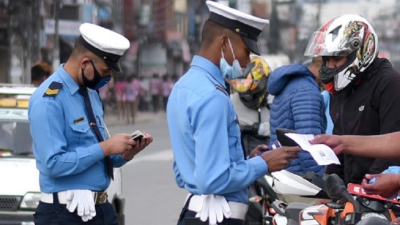
Traffic Police Penalize 336 Drivers in 24 Hours
October 24, 2026
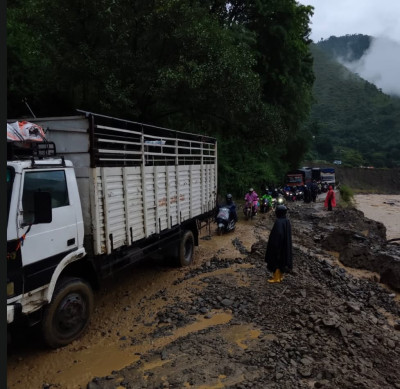
BP Highway Reopens After Debris Cleared
October 10, 2026