Resource Pooling Emerging as an Effective Strategy for Sustainable WASH Achievements

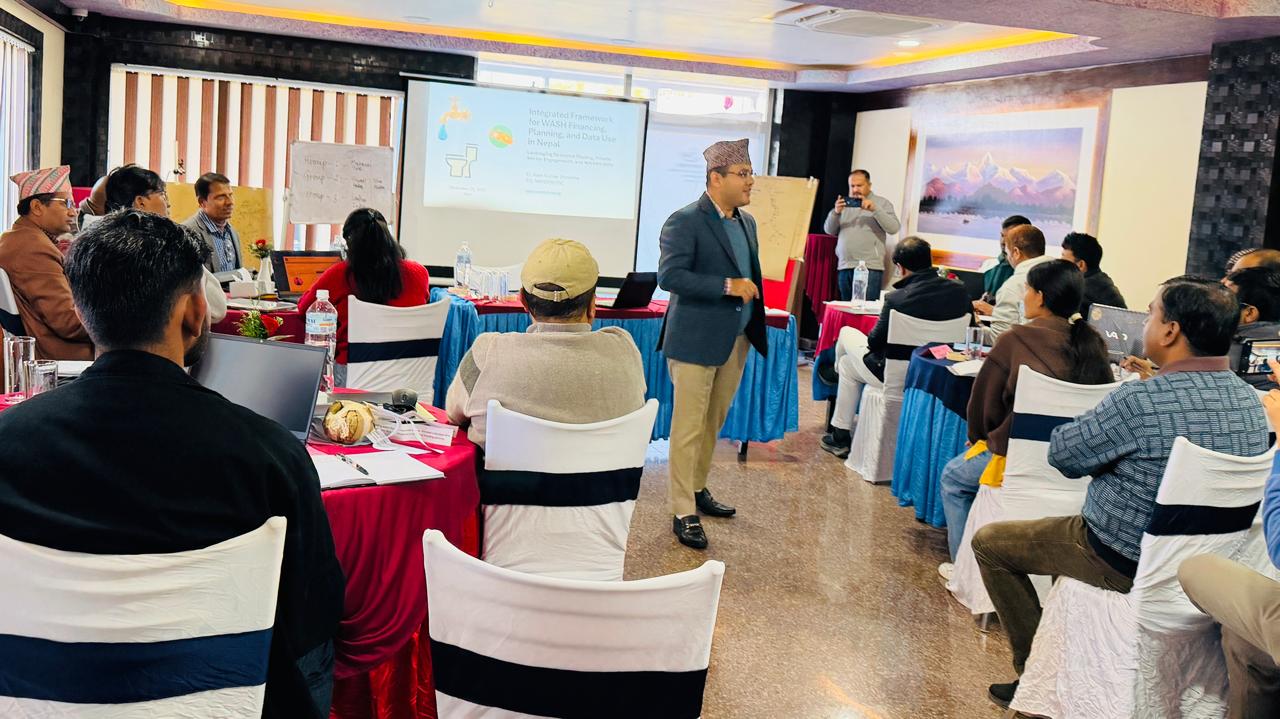
Kathmandu, Dec 26: With the goal of achieving sustainable achievements in the Water, Sanitation, and Hygiene (WASH) sector, the practice of resource pooling (resource collection) is being advanced as an effective strategy in Nepal.
By sharing resources among various stakeholder agencies to achieve common goals, this concept is expected to reduce double investment, increase coordination, and produce more impact from limited resources.
Resource pooling means the integrated use of financial, human, technical, infrastructure, and knowledge-information resources available with the federal, provincial, and local governments, development partners, non-governmental organizations, and the private sector.
It is believed that this practice will help reduce the problems of project duplication, fragmentation, and unbalanced investment seen in the WASH sector.
According to Engineer Ram Kumar Shrestha, Executive Director of the National Water Supply and Sanitation Research, Innovation, and Capacity Development Center, Nagarkot, the practice of resource pooling in Nepal’s WASH sector is moving forward through joint investment between federal, provincial, and local governments and cooperation with development partners.
He informed that the practice of co-investment in water supply and sanitation projects is increasing, especially through sector-wide and program-based budget systems.
He said, “From this type of financial resource pooling, a large and predictable budget is ensured, and programs match well with national WASH priorities. This has helped in implementing large projects that have a long-term impact by reducing the tendency to stay limited to small, separate projects.”
Mentioning that resource pooling in the WASH sector is not limited only to the budget, Executive Director Shrestha said that technical manpower like engineers, public health officers, and social mobilizers can be used commonly.
He stated that when technical capacity and experience are exchanged between different agencies, the quality of service delivery improves and the institutional capacity of the local level becomes strong.
“For this work, mechanisms like WASH regional working groups, technical task forces, and coordination committees are developing as effective mediums. Such mechanisms have been helping to reduce the distance between policy making, planning, and the implementation level,” Director Shrestha said.
The main principle of resource pooling in the WASH sector is to reduce double work, increase coordination, and achieve maximum results from limited resources.
Stakeholders emphasize that to ensure everyone's access to safe drinking water and sanitation under the Sustainable Development Goals, it is necessary to make resource pooling more institutional, transparent, and accountable.
Executive Director Shrestha said that if clear roles, transparent coordination, and shared responsibility can be ensured, resource pooling will play an important role in moving Nepal's WASH sector in a sustainable, inclusive, and effective direction.
He emphasized that to achieve long-term achievements in the WASH sector, cooperation and trust between all levels of government, development partners, and the community must be made even stronger.





Rabi Lamichhane and Mahanta Thakur Hold Talks in Kathmandu
March 31, 2026
Preparation for SEE 2082 in Rautahat Reaches Final Stage
March 31, 2026
Thunderstorms and Rain Likely Across Nepal’s Hilly Regions
March 30, 2026